Common questions teachers ask when running this lesson.
What does the article actually say the winning entry showed?
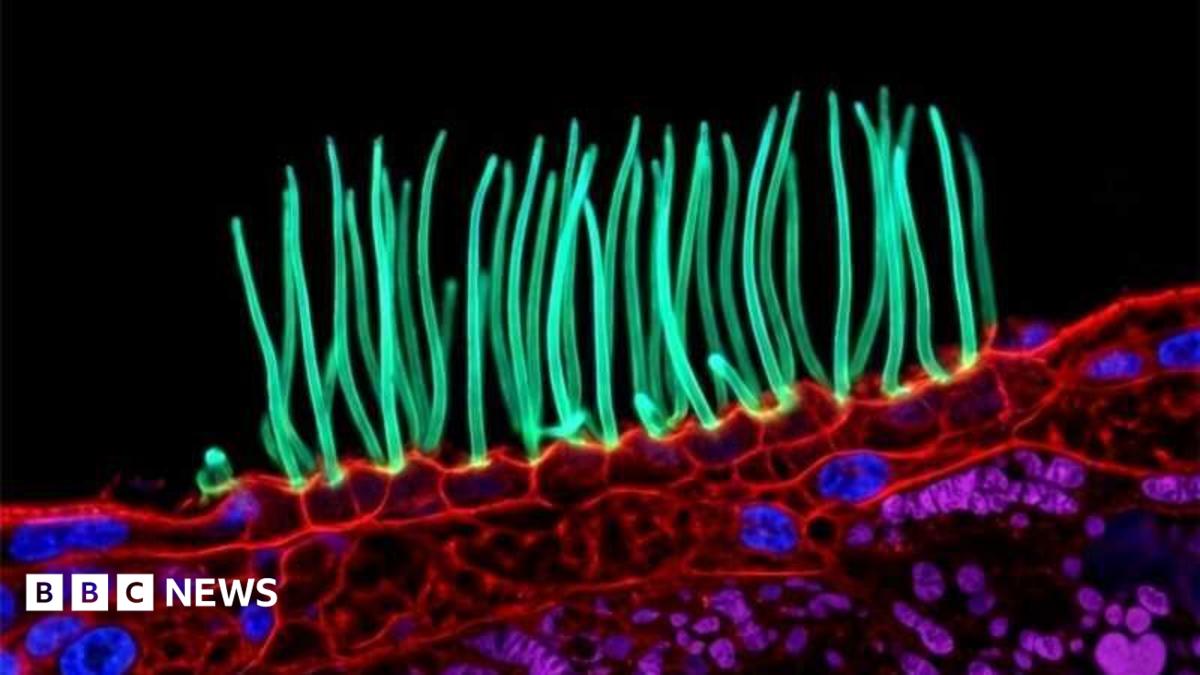
A short video of cilia — the hair-like structures lining the airway — in a child with primary ciliary dyskinesia (PCD). The entry came from Dr Ning Xu of Tsinghua University, China. Nikon's Small World In Motion contest is for photos and video taken using powerful microscopes, which is why generative AI is at issue — the contest exists to reward real microscopy.
What exactly did Xu admit to?
The article's phrasing: Xu 'acknowledged using AI, but said he believed he had acted within the rules, and had cooperated with Nikon's investigation'. The article does not tell us whether AI was used to generate the whole video or part of it, nor what stage of the workflow it entered. The important distinction for pupils is between 'using AI' and 'the whole thing was AI-generated' — the article allows both readings.
Who is Dr Robert Hirst and why does his voice carry weight here?
Dr Robert Hirst is a scientist at the University of Leicester and lead scientist for the NHS centre for PCD diagnosis. He said he had been diagnosing PCD for 20 years by examining 'their cilia waveform, length, cell size and shape', and that the cells and cilia in the entry 'look nothing like those from PCD patients'. His voice carries weight because he is the specific expert the entry was being read against.
Why does Hirst mention 'patients, scientists, doctors and PCD support networks'?
Rare conditions depend on accurate scientific imagery to be recognised, researched, funded and advocated for. A prominent prize-winning video that turns out to be AI-generated erodes trust in the broader imagery that patient communities and clinical researchers rely on. Hirst's phrasing names the people most affected: not the contest, but the PCD community.
What is Nikon reviewing, and what does that signal?
Nikon said it would 'now look at the rules and procedures of the annual contest, which has been running for 15 years and is specifically for microscopic images'. That signals two things: first, the committee thinks the current rules did not cover generative AI as cleanly as this case required; second, the committee thinks the procedures for checking entries (not just the written rules) may need to change. A 15-year-old institution changing both at once is a strong signal.
What is the article not telling us?
Three important absences. First, the article does not name which specific AI tool or model was involved. Second, it does not tell us at what stage of the workflow the AI entered — generation, upscaling, denoising, compositing. Third, it reports Xu 'acknowledged using AI' and 'cooperated with the investigation' but does not quote him directly or at length. All three absences are useful to flag to the class: the ruling is reported in detail; the technical specifics are not.
Common misconceptions
What pupils tend to think, and what to say back.
Pupils often say
Xu admitted the whole video was AI-generated.
It's actually
The article is careful. It says Xu 'acknowledged using AI, but said he believed he had acted within the rules'. 'Using AI' and 'the whole video is AI' are not the same thing — the article never tells us whether AI was used to generate the entire clip, to upscale real microscopy footage, to clean up noise, or to compose a sequence from multiple sources. What the article asserts is that Nikon ruled the use of generative AI 'did not comply with the competition rules'. Treat the piece as giving us the ruling, not the technical detail.
Try asking
What is the difference between a scientist 'using AI' as part of a workflow and a video being 'AI-generated'?
Pupils often say
Nikon's rules clearly banned AI, so there is nothing to debate.
It's actually
The article suggests the opposite. Nikon's statement says the entry 'did not comply with the competition rules regarding generative AI' — but then adds that Nikon 'will now look at the rules and procedures of the annual contest, which has been running for 15 years and is specifically for microscopic images'. Reviewing the rules after disqualifying a winner on rule-compliance grounds is itself an admission that the written rules were not as clear as the committee now wants them to be. The debate is not resolved; it is being written.
Try asking
If Nikon is reviewing the rules at the same time it disqualifies a winner under those rules, what does that tell us about how clear the rules were to the entrants?
Pupils often say
If an expert like Dr Hirst spotted the problem immediately, it must have been an obvious fake.
It's actually
Hirst's claim is specifically expert. He said 'I have been diagnosing PCD for 20 years by examining their cilia waveform, length, cell size and shape' and that the cells 'look nothing like those from PCD patients'. That is specialist pattern recognition built on two decades of clinical practice. It is not evidence that a general viewer, or even a non-PCD microscopy specialist, would have seen the same thing. The judges who awarded the prize were not all PCD diagnosticians. 'Obvious' to Hirst is not the same as 'obvious' in a broader scientific sense.
Try asking
What is the difference between an image being hard to tell apart from real and an image being hard to tell apart from real for the specific experts who look at those images every day?
Pupils often say
The real victim here is Nikon's competition.
It's actually
The article names a different group. Dr Robert Hirst said: 'This controversy has impacted a lot of patients, scientists, doctors and PCD support networks around the world.' PCD — primary ciliary dyskinesia — is a rare respiratory condition. Rare conditions depend on reliable scientific imagery for both diagnosis and advocacy. A high-profile prize-winning video that turned out to be AI-generated is not just a contest problem; it is a trust problem for the specific patient community whose disease the image was supposed to show.
Try asking
If a prize-winning image of a specific disease turns out to be fabricated, which communities beyond the contest judges are affected, and how?
Pupils often say
This is one bad entry. AI is not really changing science competitions.
It's actually
The article flags the opposite shape. It says Nikon 'would now look at the rules and procedures of the annual contest, which has been running for 15 years and is specifically for microscopic images'. A 15-year-old contest changing its procedures mid-stream is the kind of institutional response that only happens when the committee thinks the problem is bigger than one entry. The piece's whole second half is about what the rules now have to do, not what one entrant did.
Try asking
Why would a 15-year-old contest only now be reviewing its generative-AI rules, and what does that timing tell us about how fast the problem has moved?
5-minute prep
Five ready-to-run ways to open this lesson. Pick one, copy the prompt, paste it into ChatGPT or Copilot.
Read this first1 min
The story in one paragraph
Nikon runs an annual microscopy prize called Small World In Motion. The 2026 winner was a short video of cilia — the tiny hair-like structures that line the airways — taken from a child with the respiratory condition PCD. The entry came from Dr Ning Xu of Tsinghua University in China. After scientists on Nikon's LinkedIn page said the video did not look real, Nikon investigated and disqualified it, ruling that the use of generative AI broke the competition rules. Xu acknowledged using AI but said he believed he was within the rules. Dr Robert Hirst of the University of Leicester, who diagnoses PCD for the NHS, said he 'knew immediately that the video was fabricated' and that the cells 'look nothing like those from PCD patients'. The underlying question is not whether AI was used. It is where the line sits between tools that help you see something real and tools that generate something that was never there.
I am about to run a lesson on the BBC News article 'Prize-winning image which sparked backlash was AI-generated, Nikon rules' by Zoe Kleinman (9 Oct 2026, https://www.bbc.co.uk/news/articles/cr86z33pdy9vo). Please give me three short paragraphs I can read aloud in five minutes that fairly summarise (1) what the contest was and what the winning entry showed, (2) how the disqualification happened and what Xu said in his defence, and (3) why Dr Robert Hirst and the PCD patient community were affected. British English, plain register, aimed at a Y10 class.
Three phrases to hold in mind1 min
'generative AI' · 'knew immediately … fabricated' · 'acted within the rules'
The article pivots on three quoted phrases from three different speakers. 'Generative AI' is Nikon's own term for what broke the rules — careful because it names a method without naming which part Xu used. 'Knew immediately that the video was fabricated' is Dr Robert Hirst — the opposite of a cautious expert, a specialist who diagnosed the forgery on sight. 'Believed he had acted within the rules' is Xu, defending himself not by denying the AI but by challenging the interpretation. Three registers — contest-committee, specialist-eye, rule-reader — for the same underlying question: when a scientist uses AI, who decides what counts as fabrication?
Please write me three quick teacher lines I can use to introduce a Y10 class to the BBC 'Nikon disqualifies AI-generated science image' article (https://www.bbc.co.uk/news/articles/cr86z33pdy9vo). Each line names one of the three phrases — 'generative AI' (Nikon), 'knew immediately that the video was fabricated' (Dr Robert Hirst), 'acted within the rules' (Dr Ning Xu) — and says what a careful reader should hold in mind about the speaker's position. British English, plain register.
Two frames to hold1 min
Fabrication vs misinterpretation
The article puts two frames side by side without choosing between them. Frame A: Xu generated a scientific image that was never real, submitted it to a competition specifically for microscope photography, and should have been caught sooner. Frame B: Xu used AI as part of a wider workflow, believed he was within the rules of a contest whose written rules on generative AI are now being reviewed, and cooperated when challenged. Nikon's own statement sits between the two: 'did not comply with the competition rules', but 'not a judgement of the entrant's professional reputation or scientific contributions'. Today's lesson is to notice which frame each new source argues for, and whether the article asks the reader to choose.
Please give me a single two-sentence line I can put on the board that fairly presents the two frames in the BBC 'Nikon disqualifies AI-generated science image' article (https://www.bbc.co.uk/news/articles/cr86z33pdy9vo): the fabrication frame vs the misinterpretation frame. British English, neutral tone, no leading language.
The phrase to challenge1 min
Ask what 'acted within the rules' actually means
Xu said he 'believed he had acted within the rules'. Ask the class which word is doing the most quiet work. 'Believed' is doing a lot — it signals good faith without claiming he was right. 'Acted' leaves open whether the action was generating the image, selecting a frame, or submitting it. 'Within the rules' is the real pivot: Nikon says the entry 'did not comply with the competition rules regarding generative AI' and is now reviewing those rules — which quietly admits the written rules may not have been as clear as the committee needed. Every reading of the story starts with holding one of those words.
Please give me one classroom prompt for a Y10 English lesson that asks pupils to interrogate Dr Ning Xu's phrase 'acted within the rules' from the BBC article (https://www.bbc.co.uk/news/articles/cr86z33pdy9vo), picking the single word doing the most rhetorical work. British English, two sentences maximum.
If it derails1 min
A fallback line if the class decides Xu is simply dishonest
If the discussion collapses into 'Xu cheated, end of story', gently redirect. Suggested line: 'The article does not tell us Xu meant to deceive. It tells us he acknowledged using AI, said he believed he was within the rules, and cooperated with the investigation. It tells us Nikon disqualified the entry on rule-compliance grounds and is now reviewing those rules. Those two things are both true at the same time. The lesson today is not whether Xu is a cheat. The lesson is to notice what the article actually asserts, what it reports as Xu's defence, and what it carefully leaves to the reader to decide.' Hold the line that the article is reporting a ruling, not a verdict on character.
Please give me one calm classroom line I can use to redirect a Y10 discussion of the BBC 'Nikon disqualifies AI-generated science image' article (https://www.bbc.co.uk/news/articles/cr86z33pdy9vo) if pupils collapse into treating Dr Ning Xu as straightforwardly dishonest. British English, warm, non-confrontational, factually accurate to what the article says and does not say.