Common questions teachers ask when running this lesson.
What exactly is a ticket-buying bot?
A ticket-buying bot is a piece of software that opens many copies of a ticketing website at the same instant the sale begins, fills in the checkout form faster than a human can type, solves (or circumvents) any CAPTCHA image puzzle, and completes the purchase using pre-loaded payment details. One operator with the right setup can appear to the ticketing site as hundreds of simultaneous 'customers' and buy whole blocks of seats before any real human has finished reading the first page. The bot is not AI in the ChatGPT sense — it is scripted automation. But modern bots use AI techniques to beat image CAPTCHAs and to mimic the mouse-and-keyboard rhythm of a real buyer, which is why the piece calls this a 'sophisticated' attack.
Why does Gigantic let the bots in in the first place?
The article does not fully answer this. Any public ticketing site faces a hard trade-off: the more friction it adds to stop bots (CAPTCHAs, two-factor codes, identity checks, slow queues), the more real fans drop out of the sale from frustration or technical difficulty. Gigantic's statement — error messages on the site, halted the sale 'to protect fans' — tells pupils that the site did detect something, did stop, did apologise, and promised to work on fairness. The piece leaves open the deeper design question: should ticketing be first-come-first-served at all, when first-come at internet speed is a competition humans cannot win against software?
Who is Sam Fender and why is this story a cultural moment?
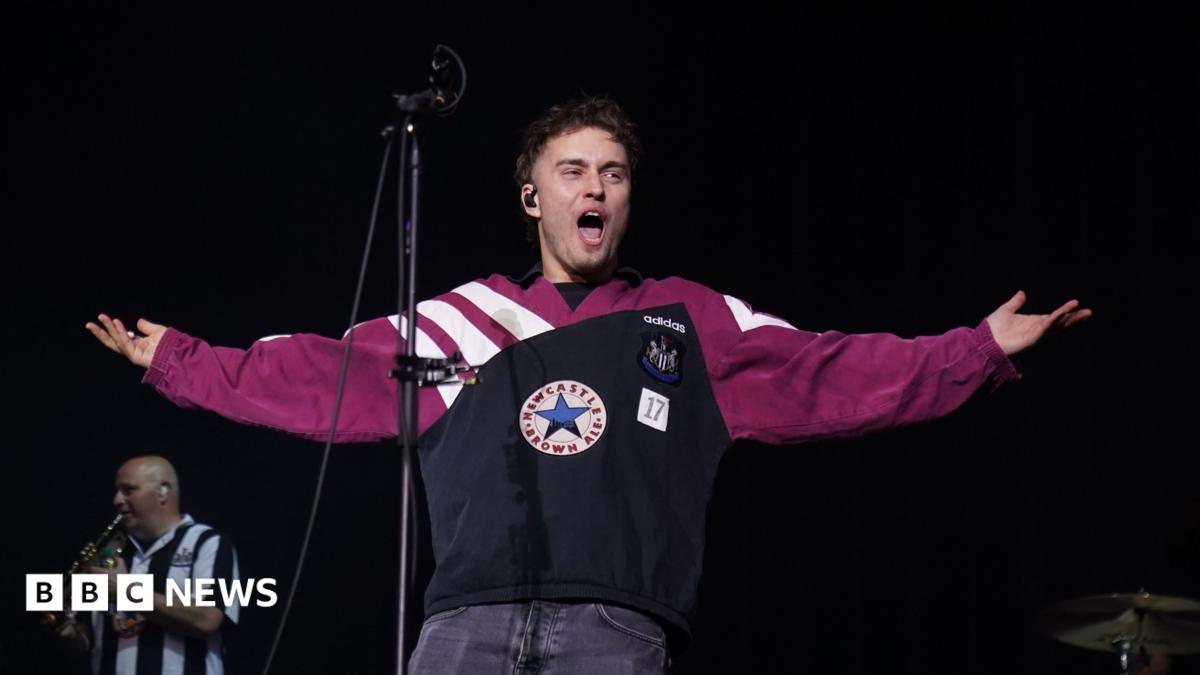
Sam Fender is a British singer-songwriter from North Shields, Tyneside, now 32. He grew up a few miles from St James' Park, which is Newcastle United's stadium and the city's cultural living room; playing it is a hometown homecoming, not just a tour date. He is also unusual among big-ticket British artists in publicly criticising ticket pricing — days before this story, the article notes, he removed a ticket category from sale because he was unhappy with the cost for fans. Pupils should notice that Fender is one of the few artists who takes the fans' side out loud, which is part of why the bot attack on this specific show lands as news.
What is the 'Proper Massive Stadium Tour'?
It is the name Fender gave to the tour he announced last week. It visits six cities: Newcastle (St James' Park), Cardiff, London, Edinburgh, Dublin and Manchester. Newcastle is his hometown date — likely the most emotionally charged and most financially valuable show on the schedule. The article names the five other cities but does not say which came first in the pre-sale window; it only reports that bot activity was flagged on Newcastle and that the London sale went through without reported problems.
What is the UK legal position on ticket bots as of 2026?
The 2018 Breaching of Limits on Ticket Sales Regulations (SI 2018/735) made it a criminal offence in the UK to use automated software to buy more tickets than a ticketing site allows per customer. The offence sits under the Digital Economy Act 2017. In practice very few prosecutions have been brought, partly because operators run their software offshore, and the resale platforms where bot-bought tickets reappear remain legal — the law targets the buying bot, not the selling-on. The debate section asks pupils whether joint liability on the resale platform would change that, which is live policy ground, not settled law.
What is the article not telling us?
Four important absences. First, no number — how many tickets were bought by bots, or how many were successfully blocked, is not given. Second, no voice from any affected fan — the piece names Fender and Gigantic but no actual queueing customer. Third, no detail on what Gigantic's defences were or will be — 'suspicious activity' is doing a lot of work. Fourth, no mention of resale sites — if the bots did win any tickets, where will those tickets appear next, and at what mark-up? The piece is a strong statement of two voices (Fender, Gigantic); the voices of the fans and the resellers are not in it.
Common misconceptions
What pupils tend to think, and what to say back.
Pupils often say
A bot bought every Sam Fender ticket.
It's actually
The article is more careful than that. Gigantic said it 'detected an unusually high volume of suspicious activity' and halted the Newcastle pre-sale as a protective measure. It does not say how many tickets were bought by bots, how many were blocked, or whether any bot tickets completed. The headline is about the sale being rescheduled, not about the bots winning. Pupils who leave with 'the bots got them all' have added a claim the article does not make.
Pupils often say
The bots affected every date on Sam Fender's tour.
It's actually
Only Newcastle was named in the piece. The article says: 'The musician from North Shields did not give details for any other venues being affected by the bot attack, but a source told the BBC they did not have any issues buying tickets for the London show.' The Proper Massive Stadium Tour has six cities (Newcastle, Cardiff, London, Edinburgh, Dublin, Manchester); the article names bot activity on one. Pupils should notice that the one venue which was targeted is almost certainly the most valuable date on the tour — Fender's homecoming at St James' Park — which is a story in itself about how bots pick their targets.
Pupils often say
Gigantic was the one being attacked, so Gigantic is the victim.
It's actually
The article names a more complicated picture. Gigantic is both the service that fans use AND the site on which the bots operate. The piece quietly asks why the bots can succeed in the first place — error messages on the site were the symptom pupils see, but the deeper story is a platform whose own queue is open enough for an 'unusually high volume of suspicious activity' to get in. Pupils should notice that 'platform under attack' and 'platform not stopping the attack' are two different claims, and the article contains both.
Pupils often say
Delaying the sale 24 hours fixes the problem.
It's actually
The article does not say the delay fixed anything. It says Fender moved the sale back 24 hours 'to ensure real fans get the tickets' and that Gigantic halted the sale 'to protect fans'. The piece does not report whether the second sale, on Thursday morning, succeeded; whether the bots were blocked overnight; or how Gigantic planned to tell real humans from bots when the sale re-opened. Pupils should notice that 'move the sale 24 hours' is a response to the attack, not a defence against it — the same bots can run again on Thursday.
Pupils often say
If a bot bought a ticket, it still counts as someone buying it — a reseller sells it on, a human ends up at the gig.
It's actually
That is a position some pupils will take, but it is not what Fender himself argues in the article. His line — 'to ensure real fans get the tickets' — frames the issue as WHO reaches the artist, not WHETHER the tickets are eventually sold. The reseller model routes tickets through a secondary market where price is set by scarcity, not by the artist. Pupils who think 'the ticket still gets used' are measuring the wrong thing — the article is about who pays what, and whose relationship it is between the artist and the audience.
5-minute prep
Five ready-to-run ways to open this lesson. Pick one, copy the prompt, paste it into ChatGPT or Copilot.
Read this first1 min
The story in one paragraph
Sam Fender, the 32-year-old musician from North Shields, rescheduled the pre-sale for his homecoming show at St James' Park, Newcastle (summer 2027), after what he called a 'sophisticated bot attack' on the ticketing website Gigantic. He moved the sale back 24 hours, to 09:30 GMT on Thursday, so that 'real fans' could get the tickets. Gigantic said its system detected 'an unusually high volume of suspicious activity', served error messages, and halted the pre-sale 'to protect fans'. The other dates on the Proper Massive Stadium Tour — Cardiff, London, Edinburgh, Dublin and Manchester — were not reported to have the same problem, and a source told the BBC the London pre-sale went through without issue. Days earlier Fender had removed one ticket category from sale, saying he was unhappy with the costs for fans and those costs were out of his control. The lesson today uses three Lab pedagogies to open the story up: who stands where, what one pupil would actually do, and what the law should actually say.
I am about to run a lesson on the BBC News article 'Sam Fender's Newcastle pre-sale moved after bot attack' (29 Oct 2026, https://www.bbc.co.uk/news/articles/cw3djl5vk3v3o). Please give me three short paragraphs I can read aloud in five minutes that fairly summarise (1) what Sam Fender did and why, (2) what Gigantic said happened on their site, and (3) which other tour dates were and were not affected. British English, plain register, aimed at a Y10 class.
The phrase to notice1 min
'To ensure real fans get the tickets'
Fender's Instagram post gives the article its most-quoted line: 'We're going to have to move the Newcastle pre-sale to 09:30 tomorrow to ensure real fans get the tickets.' The phrase 'real fans' is doing a lot of quiet work. It implies there is such a thing as an UNREAL fan, which the piece does not define. Does an 'unreal fan' mean a bot? A reseller? A casual listener who heard the single once? Someone who bought the ticket as a gift? The phrase lets Fender claim moral ground over the sale without having to name who is excluded. Pupils today will learn to notice the small word that is doing all the work and to ask who gets to decide what 'real' means.
Please give me one 60-second teacher introduction to the BBC Sam Fender article (https://www.bbc.co.uk/news/articles/cw3djl5vk3v3o) that lingers on his 'ensure real fans get the tickets' line — what the phrase 'real fans' is doing, and why he chose it rather than 'our fans' or 'customers'. British English, warm register, aimed at Y10.
Two framings to hold1 min
'Protecting fans' vs 'allocating by lottery'
The article puts two framings on the same bot problem. Framing A, from Gigantic: 'Fans should be able to buy tickets fairly, and that is what we're working to make sure happens.' The platform is positioned as the fans' defender against bots. Framing B, implicit in the delay to 09:30 the next morning: when the queue is beaten by bots, the fix is to re-run the queue. Both framings share the assumption that a queue is the right way to allocate scarce tickets — that whoever shows up first with the fastest connection and best luck should get in. Pupils should notice that no voice in the article questions the queue itself. Lottery, auction, ballot and loyalty-weighted allocation are all alternatives that the piece does not name. Today's job is to hold both framings in frame and ask what each one quietly agrees to.
Please give me a single two-sentence line I can put on the board that fairly presents the two framings in the BBC Sam Fender article (https://www.bbc.co.uk/news/articles/cw3djl5vk3v3o): the 'protecting fans' framing and the 're-run the queue' framing. British English, neutral tone, no leading language.
A number to hold1 min
One venue of six was reported affected
The article names a specific detail most readers will miss on the first pass: the Proper Massive Stadium Tour visits six cities (Newcastle, Cardiff, London, Edinburgh, Dublin, Manchester), and only one — Newcastle — was reported to have the bot problem. A source told the BBC the London pre-sale went through without issue. That matters for two reasons. First, pupils will reflexively assume 'bot attacks ticket sales' is a universal event; the article is reporting one city on one morning. Second, naming WHY Newcastle and not London is left to the reader — the hometown show at St James' Park is almost certainly the most emotionally and financially valuable date on the tour, which is exactly the one a profit-seeking bot would target. The lesson should make visible both the number (one of six) and the mechanism (bots target the highest-value sale).
Please give me one classroom line I can use when teaching the BBC Sam Fender article (https://www.bbc.co.uk/news/articles/cw3djl5vk3v3o) that fairly presents the one-of-six-venues number without overstating or understating. British English, plain register, two sentences maximum.
If it derails1 min
A fallback line if the class decides 'all tickets go to bots now'
If the discussion collapses into 'all tickets go to bots now, there's no point even trying', gently redirect. Suggested line: 'That is not what the article is reporting. The piece names a specific thing — one venue, on one morning, on one platform, where the system detected what it called suspicious activity and halted the sale. Fans still bought Fender tickets for the five other cities on the tour. The question the article actually puts to us is not whether bots now control every ticket sale, but what a ticketing site should DO when it sees them and who should be legally responsible for the ones that get through.' Hold the line that the article is reporting one event, not the collapse of ticketing.
Please give me one calm classroom line I can use to redirect a Y10 discussion of the BBC Sam Fender article (https://www.bbc.co.uk/news/articles/cw3djl5vk3v3o) if pupils collapse into saying all tickets now go to bots. British English, warm, factually accurate to what the article actually argues.