AI Energy at Work
What each prompt actually costs, and the habits that shrink your organisation's footprint
The bottle of water hiding in every prompt
Let's watch the range live.
Pick one of the prompts below. Copy it. Paste it into whichever AI you already use (ChatGPT, Claude, Gemini, Copilot). Then run the next one. Then the next. Notice how long each response takes to come back, and how many words it produces.
Every one of those seconds is a data centre working. Every one of those words is a token, and every token has a small but real energy cost attached to it.
You just asked the AI to write a haiku, then a novel opening, then a spreadsheet analysis. The screen didn't hint at it, but each of those took a very different bite out of a data centre somewhere, and out of the water tank keeping that data centre cool.
For most of us the electricity bill and the water bill are somebody else's problem. They arrive quietly on the back of a monthly invoice, or they don't arrive at all because the AI vendor is absorbing them for now. That invisibility is the whole issue. It's very hard to be careful with a cost you never see.
Over the next hour we'll make the cost visible. We'll look at where the energy actually goes, how big one query really is, how it multiplies when a whole workforce reaches for AI on autopilot, and the small handful of habits that will meaningfully shrink your organisation's AI footprint without anyone having to give the tools up.
Write me a haiku about a Monday morning meeting.
Write the opening chapter of a novel set in a small English seaside town in November. Aim for about 800 words, with strong atmosphere and one main character introduced by the end.
I'm going to describe a fictional quarterly sales spreadsheet. Analyse the trends I mention, flag anything unusual, suggest three follow-up questions, and give me a 200-word summary suitable for a board pack. Quarter 1: Product A sold 12,000 units at an average price of £49, Product B sold 4,200 units at £128, Product C sold 900 units at £410. Quarter 2: A dropped to 9,500, B climbed to 5,800, C stayed flat. Quarter 3: A rebounded to 13,200, B fell to 3,100, C jumped to 1,400. Quarter 4: A ended at 14,000, B recovered to 5,600, C settled at 1,150.
Look at the three responses side by side and ask the room:
- Roughly how long did each response take to come back? Which was noticeably slower?
- Which one produced the most text? Roughly how many words?
- If your team ran the equivalent of Prompt C a thousand times a month, and Prompt A ten thousand times a month, which one is quietly dominating your organisation's AI footprint?
- Where does the extra work happen? On your laptop, or somewhere else?
Where the energy actually goes
When the news talks about AI energy costs, two very different things usually get lumped together. It helps a lot to keep them separate.
The first cost is training. A large language model like the ones powering ChatGPT or Gemini learns by being run over vast amounts of text, tuning billions of internal parameters as it goes. Public estimates for training GPT-3 back in 2020 put the electricity bill at around 1,300 megawatt-hours, roughly what a small town uses in a month. Newer frontier models are bigger and hungrier. This is a one-off cost per model version, but a very large one.
The second cost is inference, which is the technical word for what happens every time someone types a prompt and presses enter. Compared to training, one query is tiny. But there are a lot of queries. Every request from every user, all day, every day. The daily inference total across a large AI provider now quietly rivals what a small country uses.
Both matter. But for you as a user or a team lead, it is inference you can actually influence. Training happens whether you sit at the keyboard or not. Inference happens because someone asked.
How much is one query, really?
One query on its own is a hard thing to picture. It helps to compare it with things we have been doing for years without thinking twice.
The numbers in the cards below are ballpark estimates, not audited figures. They shift with the model you're using, the length of your prompt, and which data centre serves you. But they are accurate enough to build a working mental model on.
Before you tap the cards, have a guess. If a Google search were a candle, what would a ChatGPT query look like? A torch? A room light? A bonfire?
Tap each card to see the rough comparison.
A Google search
Roughly 0.3 watt-hours per search, based on Google's own published figures. That is about what it takes to power an LED bulb for a couple of minutes. This is our baseline.
A short ChatGPT text query
Independent estimates put a typical short exchange at roughly ten times a single Google search. Newer, better-tuned models will be cheaper than the earlier figures, but the ballpark still sits well above a search.
Generating an AI image
Peer-reviewed work has found one image generation can use roughly as much electricity as fully charging a smartphone. Video generation is dramatically higher again, several orders of magnitude above a text reply.
A long, context-heavy analysis
Pasting a whole document, PDF, or spreadsheet into a chat can multiply the cost by ten or more compared with a short prompt, because every token in the input has to be processed before the AI even starts writing.
None of these are a scandal on their own. It becomes a scandal only when we forget the scale, which is what we come to next.
The water side
The electricity story gets most of the airtime. Water sits quietly next to it and matters just as much.
Modern data centres run hot. Racks of GPUs training and serving AI models generate enormous amounts of heat, and that heat has to go somewhere. In many facilities the answer is evaporative cooling: water is pumped through the building, absorbs heat, and evaporates into the air. Once evaporated, it is gone from the local supply. The data centre needs more.
Independent estimates suggest that a short conversation with a large AI model, perhaps twenty or thirty exchanges, is in the ballpark of half a litre of water once you count both the direct cooling and the water used upstream at the power station. Training the model that powers those conversations in the first place has been estimated at hundreds of thousands of litres. And in regions where water is already stressed, this stops being a metaphor and starts appearing on local council agendas.
The workforce multiplier

One query is easy to dismiss. It is roughly a light-bulb-minute of electricity and a mouthful of water. Nobody sensible loses sleep over that.
Now stretch it out. A workforce of 200 people, each asking the AI 30 questions across a working day, is 6,000 prompts a day. Add casual image generation and the occasional big-document analysis and the daily total balloons.
At the organisation level this shows up in three places. First on the vendor's invoice, because most AI providers now bill per token used. Second in the sustainability report that an increasing number of clients and regulators are asking for. Third in the wider infrastructure story, because every extra query is a small vote for building more data centres.
The point of this slide is not to make anyone feel guilty about typing into ChatGPT. It is to notice that a small individual choice, made 6,000 times a day across your organisation, is not really a small choice any more.
Four habits that shrink your footprint
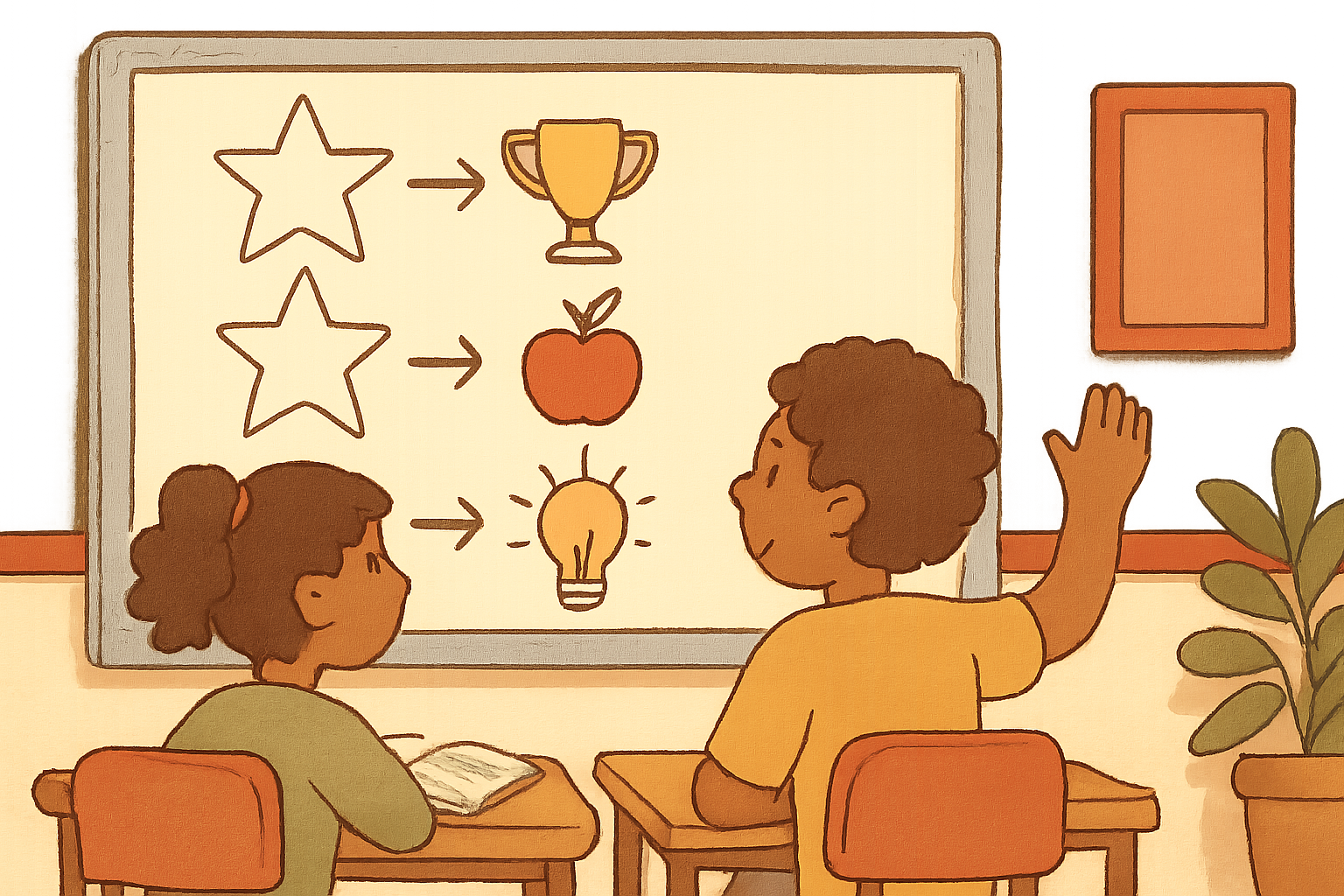
Personal habits matter here in a way they rarely do with other environmental costs, because your keyboard is where every AI query starts.
Before you tap the cards below, have a think. If you were coaching a junior colleague to use AI more responsibly, what would you tell them?
Tap each card to reveal.
Right-size the model
The biggest, slowest, most expensive model is rarely the right tool for everyday work. Most vendors now offer a smaller, faster, cheaper tier. For summarising a memo or rewriting a paragraph, that tier is plenty. Save the frontier model for the tasks that actually need it.
Write tighter prompts
Every token you send and every token the AI returns costs energy. A precise, well-structured prompt gets a better answer in fewer words. Cutting your average response from 400 tokens to 150 is a real saving when you do it thousands of times a month.
Batch and reuse
If you are going to ask the AI ten similar questions, ask them in one prompt with a numbered list. If a colleague already asked something you also need, ask them for the answer instead of running it again. Shared knowledge is free.
Notice what does not need AI
Not every task is an AI task. A calculator is thousands of times more efficient at maths. A spellchecker is thousands of times more efficient at fixing typos. Use the right tool for the job and save the AI for the jobs that genuinely need it.
None of these habits ask you to stop using AI. They just push you to use it deliberately, and at the right size.
Bad prompt, good prompt
Habits are a good start. Prompt hygiene is where they become concrete.
The two prompts below ask for the same thing: a short internal summary of a policy change aimed at line managers. Both work. One uses roughly four times the energy of the other, mostly because the padding forces the AI to produce a much longer, less useful response.
Hi there, hope you're doing well today. I was wondering if you might be so kind as to help me put together a really lovely, warm, comprehensive summary of the new remote-working policy for our line managers to read, ideally something that covers all the key points in a clear and friendly way and is easy for them to skim on a busy morning. Thanks so much in advance for your help with this, really appreciate it.
Around 90 tokens on the input, almost all of it padding. The AI mirrors the register back at length, so you tend to get a 500-token chatty response as well. Total: roughly 600 tokens per exchange. Run this 20 times a day across a team of 50 and the difference stops being trivial.
Summarise the new remote-working policy for line managers. 4 bullet points. Skimmable in 30 seconds. Include one line on the manager's own action.
Around 30 tokens on the input, and it produces roughly 120 tokens back because the constraints are tight. Same job done, roughly a quarter of the energy. Also easier for the reader, because the shape is fixed.
So what would you do?
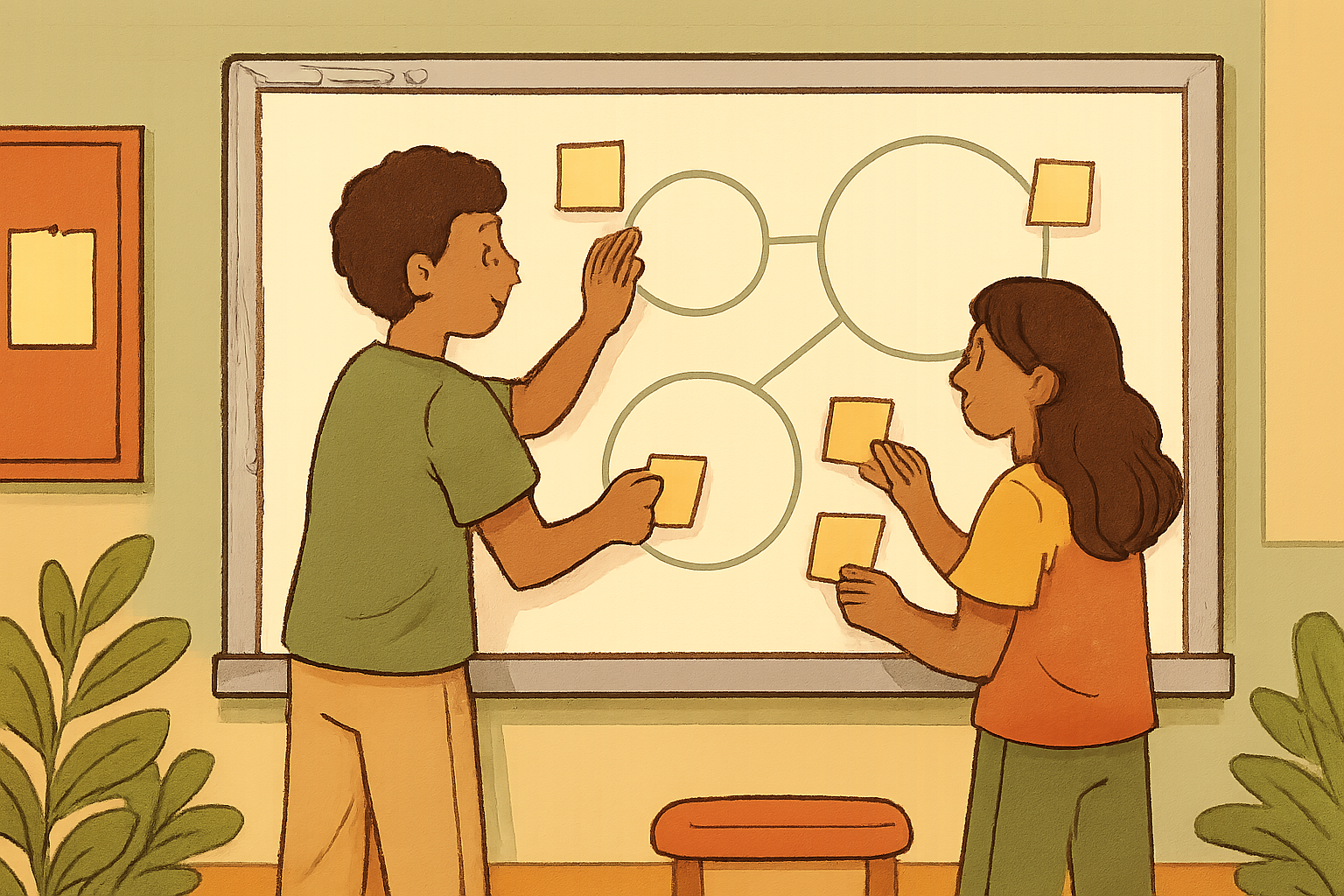
Time to put it into practice. You're a middle manager at a mid-sized professional services firm. The leadership team has just rolled out a paid ChatGPT licence for the whole staff of 400 people and encouraged everyone to use it liberally.
Two weeks in, someone in Finance flags that the AI vendor bill for the pilot fortnight was three times the forecast. Someone in Sustainability separately asks what this means for the firm's carbon reporting. Someone in HR worries that people will feel policed if you introduce limits.
You've been asked to write a one-page recommendation. You have the habits, the prompt trick, and a rough sense of the scale. You need a plan.