The AI's big hungry computers
Every time we ask, a big computer gets to work
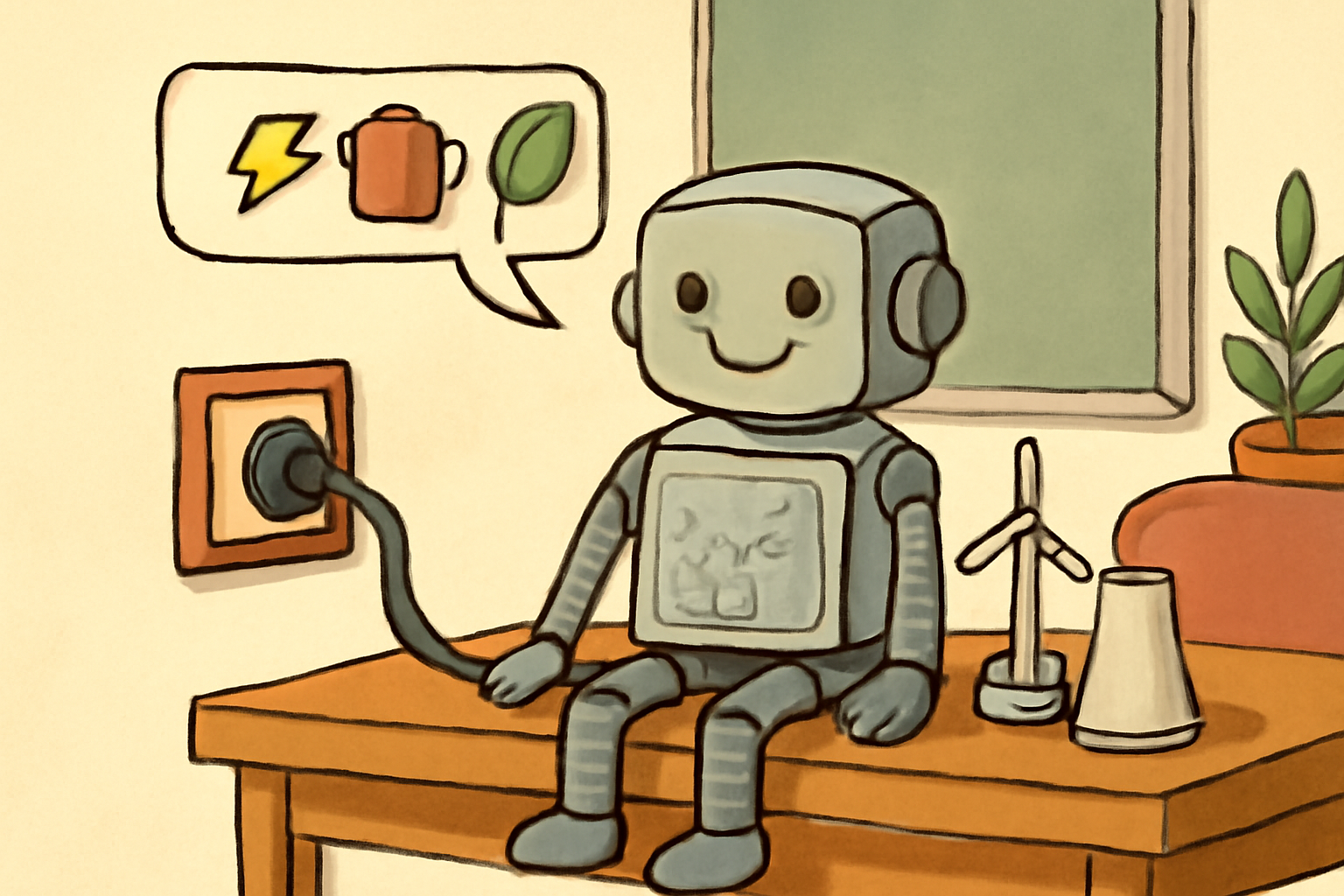
Where does the AI get its power?
Ask the AI for a tiny thing, and then ask it for a really big thing. Notice which one takes longer.
When you talk to the AI on the screen, something amazing is happening far away. A huge computer wakes up and gets to work, just for you.
And that computer needs power to think, just like our telly, our lamps, and our kettle do.
So every time we ask the AI a question, we are switching on a very big helper. Let's see how it works.
Please write me one short, silly line about a snail. Just one line.
Please write me a very long story about a friendly dragon, and then draw me three different pictures to go with it.
After you try both, ask the class:
- Which one did the AI finish quickly? Which one took ages?
- Which one felt like MORE work for the computer?
- In your house, what things use a tiny bit of power, and what things use lots?
Flick a light on and off. That is a tiny bit of power. Now think about a big fridge, humming away all day and all night. Which one uses more? The big fridge does. The AI is a bit like that too, so little jobs use a little power, and big jobs use lots and lots.
The AI needs electricity
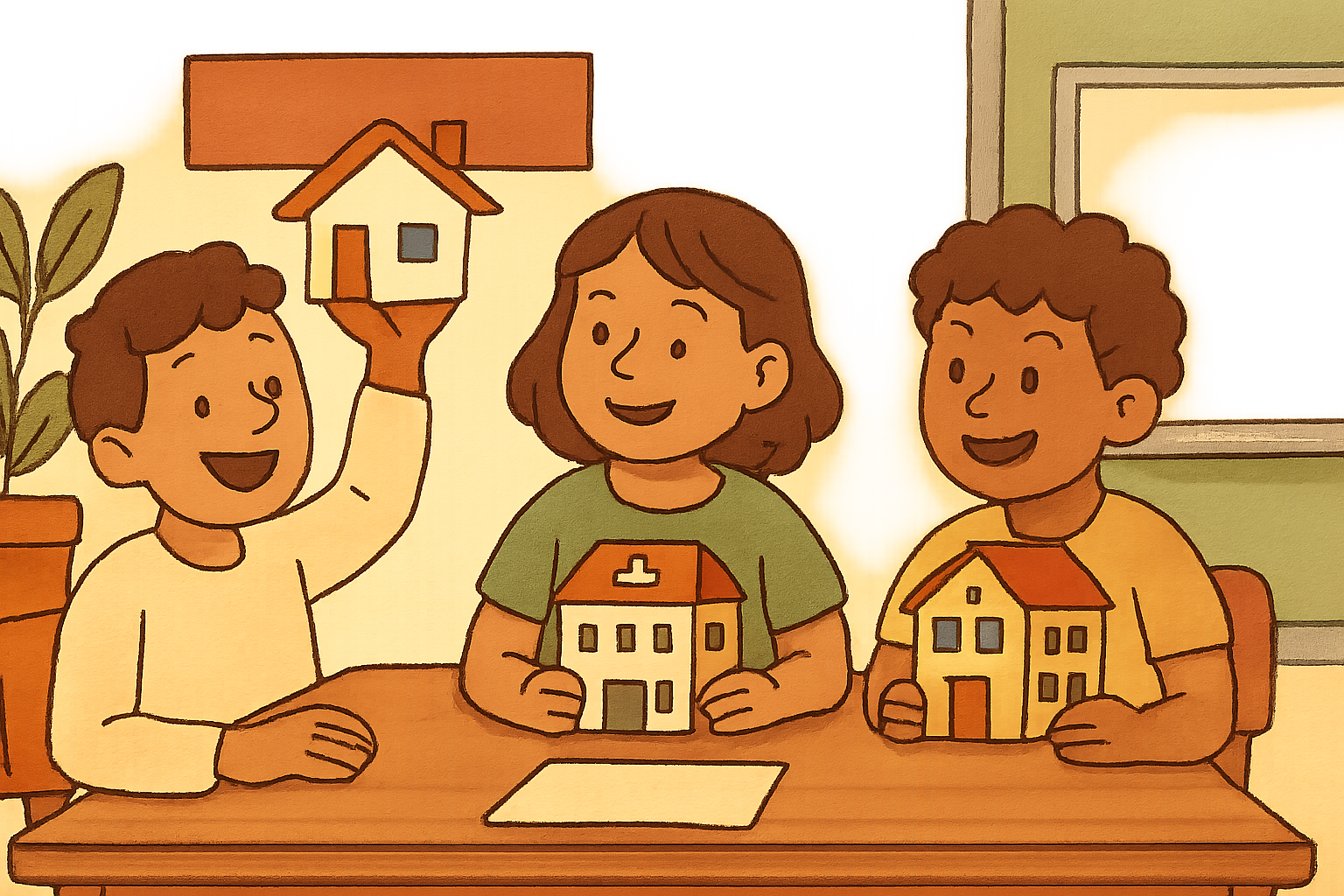
The AI lives inside a huge computer, far away in a big room full of computers. To do its job, it needs electricity, just like our lamps and our telly do at home.
When you send the AI a question, the big computer wakes up and starts to think. It uses power the whole time it is thinking, and it gets warm too.
So every question you ask is a tiny switch turning on a very big helper.
Look around the room together. Point at things that need electricity to work, like the lights, the whiteboard, and the computer. Then point at things that do not need any, like the pencils, the books, and the chairs. The AI is one of the things that needs power, and it just uses that power far away.
Small jobs and big jobs
Not every job is the same size. Asking the AI for one little word is a small job. Asking for a whole book with lots of pictures is a really big job.
Big jobs need more power, just like a kettle uses more than a torch.
Tap each card to see if it is a small job or a big one.
Tap each card to see.
Say hello to the AI
A tiny job. Just a little bit of power.
Ask for one silly joke
A small job. A quick think, and it is done.
A long story with ten pictures
A BIG job! Lots of power, and lots of thinking.
Twenty pictures of twenty different cats
A VERY big job. That is lots and lots of power.
So a tiny question is like a tiny snack, and a huge question is like a huge dinner. Both are fine, but the big ones cost more.
Say a few things the AI could be asked. After each one, the class holds a hand low for a small job or a hand high for a big one. Try: 'name my toy dinosaur', 'draw me one hundred robots', 'what is 3 add 4', and 'write a whole song and a poem and a story'.
Be kind to the big computers
The AI is happy to help, but power is precious, so we try to be kind when we use it.
That means asking once, asking clearly, and only asking when we really want to know. If we tap the button over and over just for fun, the big computer works and works for no good reason.
You are the boss of the AI. A kind boss helps it do useful things, not silly ones a hundred times in a row.
Pretend you are the AI. Ask a pupil to say 'draw a dog' ten times in a row, as fast as they can. It feels silly, doesn't it? Now they say it once, clearly, and it is much easier. That is what we do for the AI. Ask once, be clear, and let it help.