How thirsty is AI?
Why every question you ask uses electricity and water
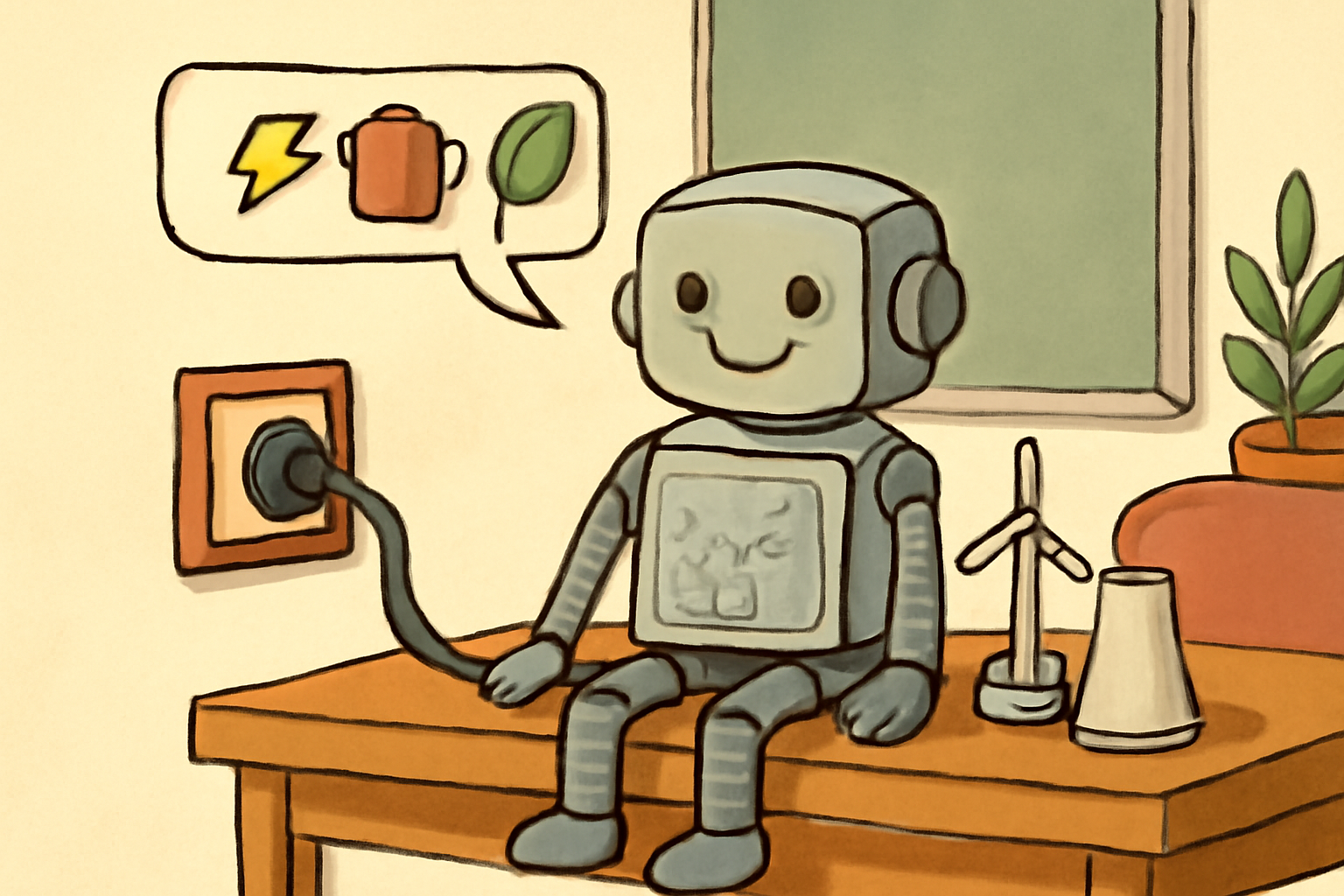
The hidden thirst of AI
Before we say anything, let's watch the AI do a small job and a big job and see the difference.
Pick one of the prompts below. Copy it into any AI the class can see (ChatGPT, Copilot, Gemini). Time how long the AI takes to reply. Then try a bigger prompt and time that too.
The longer the AI takes, the more its computer had to think, and the more electricity it used.
You probably don't think about it, but every time you type a question into an AI, a very big computer somewhere else in the world starts working on it. Those computers live in huge buildings called data centres, and they get really hot.
To keep them cool, the buildings use lots of electricity AND lots of water. One tiny question doesn't use much. But millions of people are asking AI questions every day, so the small sips add up fast.
In the next fifteen minutes we're going to see how much power AI really uses, and pick up a few habits that help us use it more kindly.
Please tell me one short, silly joke about a cat.
Please write me a whole story, about a page long, about a dragon who is scared of fireworks.
Please draw me a picture of a dragon who is scared of fireworks, in a colourful cartoon style.
Look at the three tries together and ask the class:
- Which one took the longest? Which one was quickest?
- Which one do you think used the most electricity, and why?
- If everybody in our class asked the AI to draw a picture right now, how many pictures would that be? What if the whole school did it?
With a stopwatch, time each prompt from the moment you press enter to the moment the AI finishes. Write the three times on the board. The class will see with their own eyes that a big job (a story, a picture) takes way longer than a tiny job (a joke). Longer thinking means more electricity used.
AI lives in a really big building
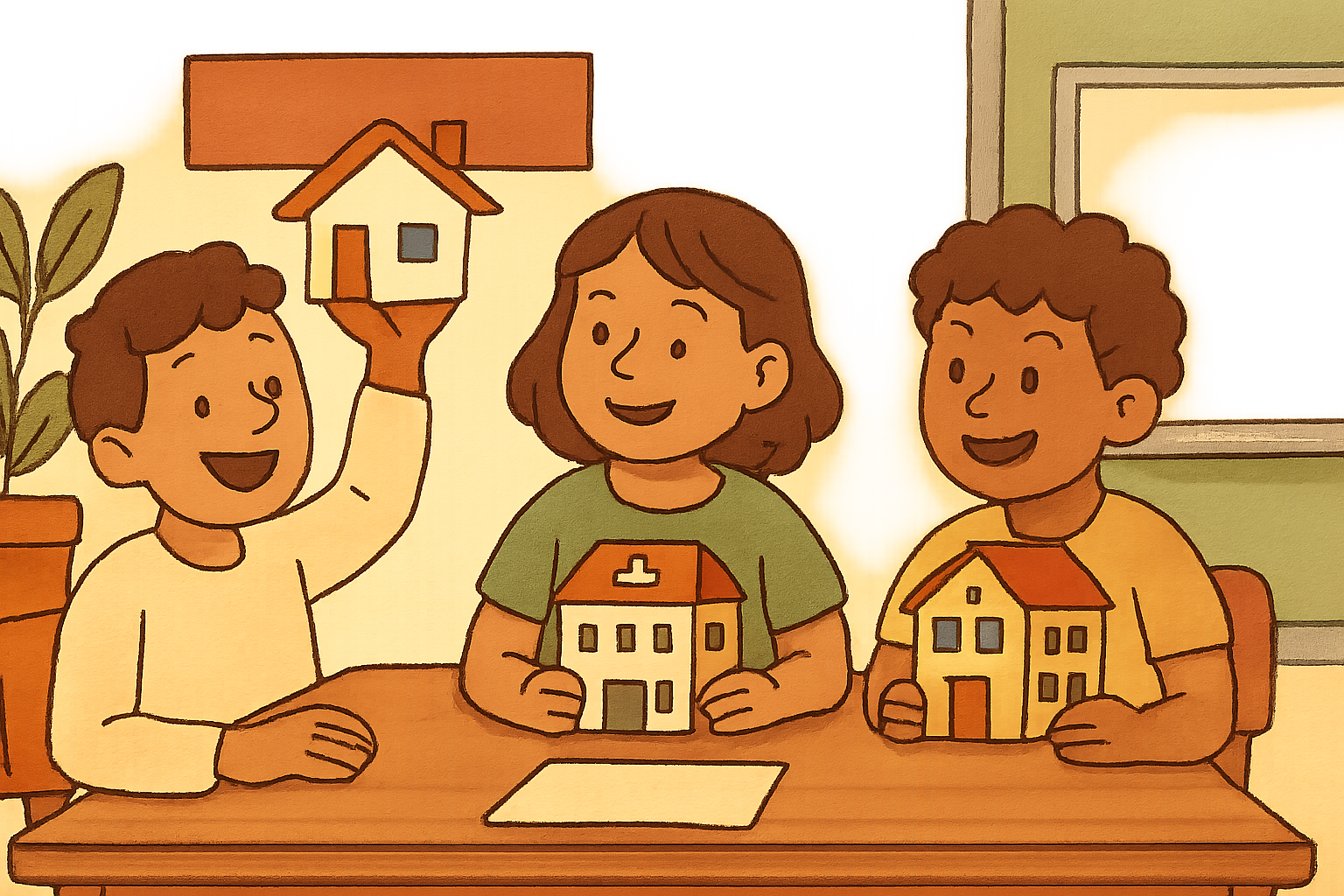
When you ask an AI something on a phone or a laptop, the AI is not really inside your device. Your question zooms off through the internet to a huge building called a data centre. Data centres are often as big as a football pitch, or bigger.
Inside that building, thousands of computers work together to answer you. They think really fast, and that makes them get hot. So the whole building has to be cooled down. That takes electricity AND water.
Every question you ask uses a tiny bit of both. Just a sip. But there are millions of people asking questions all day long, so those sips add up.
Ask the class: 'How big do you think one of these data centres is?' Take a few guesses. Then tell them the biggest ones are the size of TWENTY football pitches, and there are thousands of them around the world. Every time we ask an AI a question, one of those buildings does a bit of work for us.
One question, one small drink
Not every question uses the same amount of energy. A quick search uses hardly anything. An AI question uses more. An AI picture uses way more than that. And building a brand new AI in the first place uses a huge amount.
Before you tap the cards below, have a guess: which of these do you think uses the most energy?
Tap each card to reveal.
One Google search
About one sip. Google just looks up the answer for you, it doesn't have to think it up.
One AI question
About ten sips. The AI has to think of the answer, word by word. That takes a lot more work.
One AI picture
About fifty sips! Drawing a picture takes even more thinking than writing a sentence.
Building a brand new AI
Millions of sips. Like a whole swimming pool of energy and water. That's why new AIs cost so much to make.
One question on its own is small. But millions of people are asking millions of questions every day, so all those sips add up to a lot.
Ask the class: 'How many times a day do you think you use Google or ask an AI a question?' Get a few guesses. Then multiply by how many pupils are in the school. Then by how many schools in the country. Point out that even a small daily habit becomes a really big number when everyone does it.
Wobbly ask, clear ask
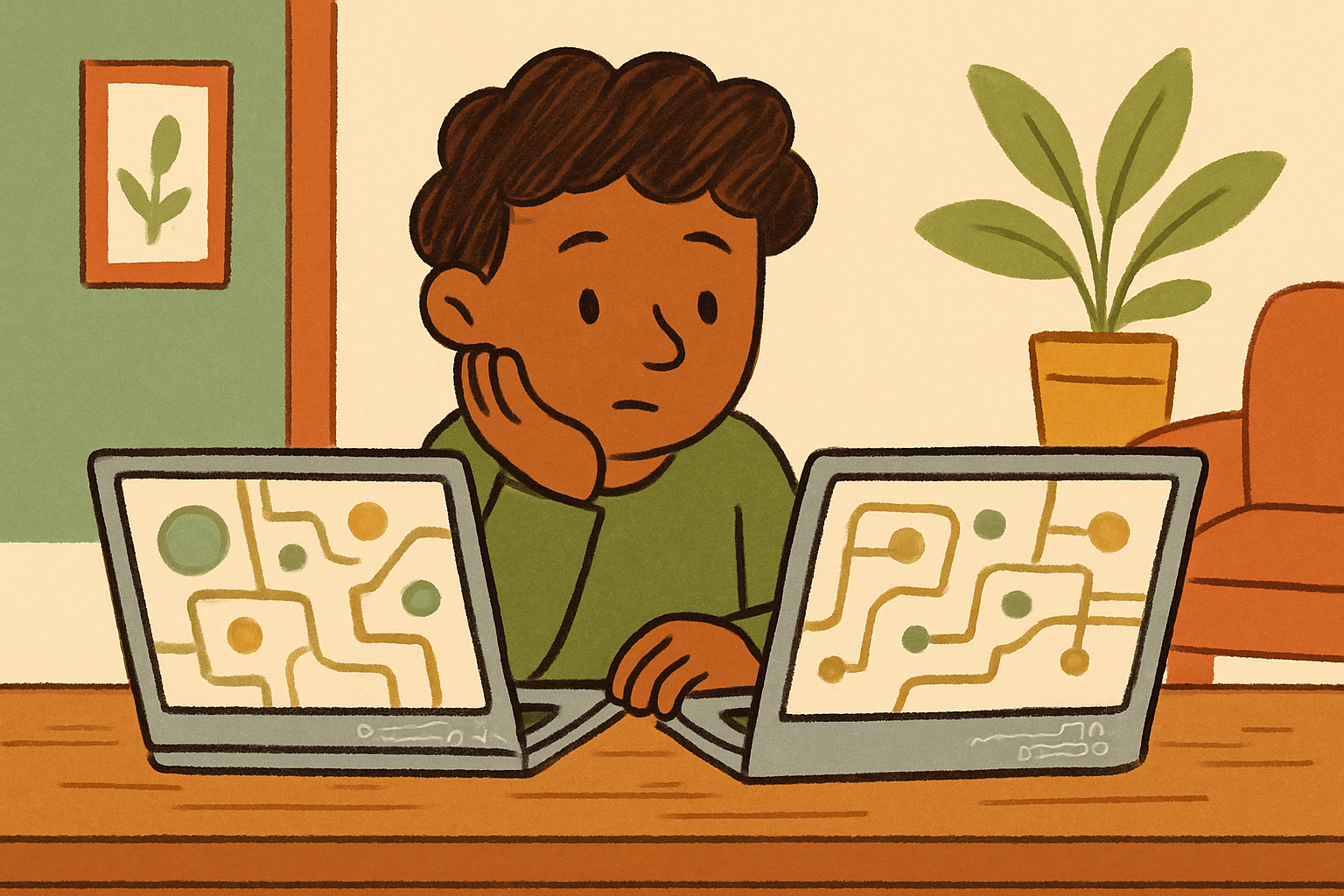
One really easy way to use less energy is to ask the AI clearly the first time. If your question is wobbly, the AI gives you a wobbly answer, and then you have to ask again. And again. And every ask uses more electricity.
The two prompts below want the same thing. Only one of them is likely to work in one try.
Um, tell me about dogs. Actually, tell me about big dogs. No wait, tell me about big dogs that like swimming.
You had to change your mind three times. That's three lots of AI energy for one answer. The AI had to think three separate times.
Please tell me about three big dog breeds that love to swim. One short paragraph for each.
One clear ask. The AI does the work once and gives you exactly what you wanted. Much less energy used.
Give each pair one of these wobbly prompts and ask them to rewrite it as ONE clear ask:
- Tell me a joke. Actually, a knock-knock one. About animals. Well, about cats.
- What's the weather? I mean tomorrow's. In our town. And in the morning.
- Help me with homework. Well, my maths one. About fractions.
Share a couple of the best rewrites. The winners are the ones that ask everything the first time.
Small habits that help
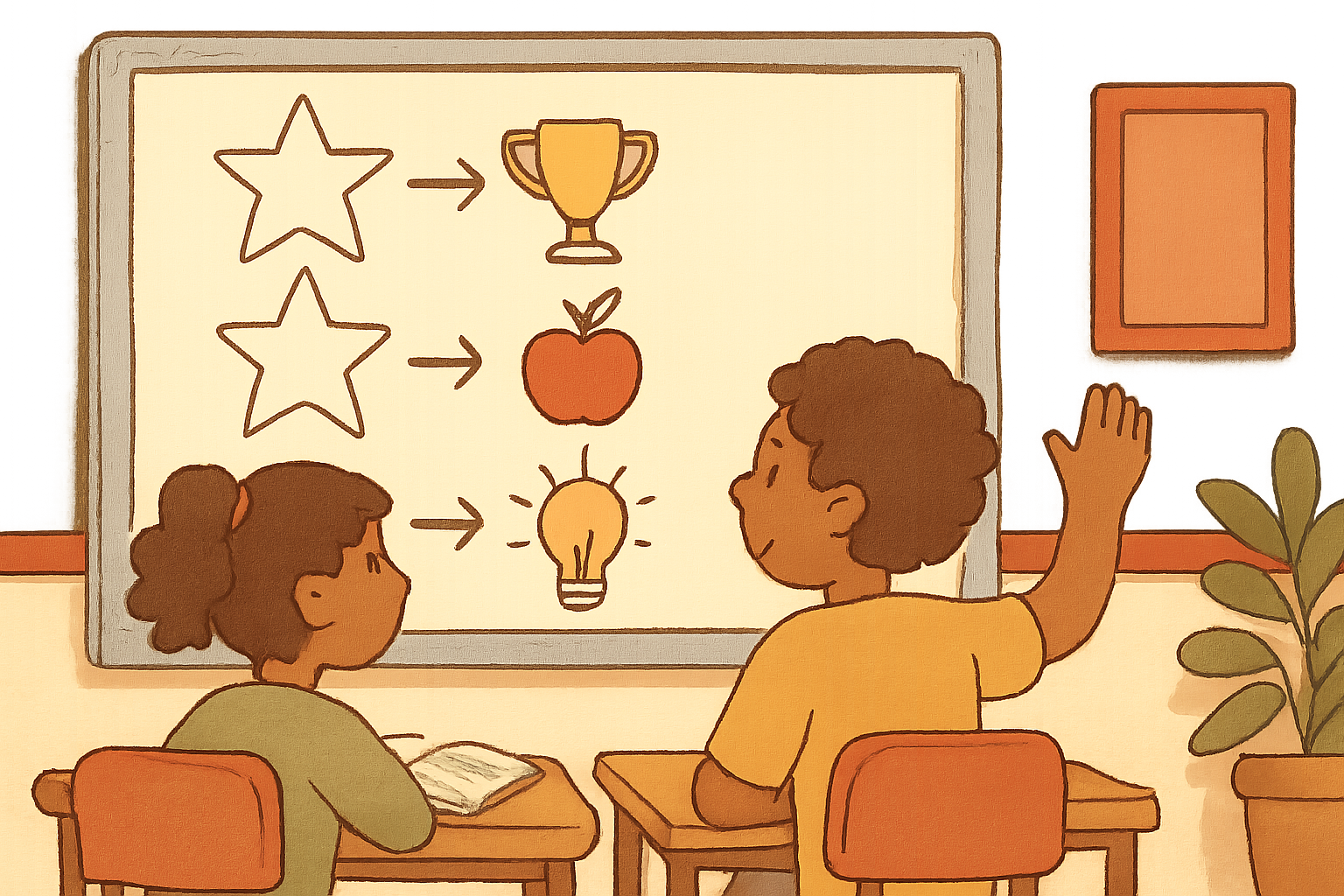
You don't have to stop using AI. But you can be a bit thoughtful about when and how you use it. Small habits, done by lots of people, really do add up.
Have a guess first. If you were teaching a friend to use AI more kindly, what would you tell them to do?
Tap each card to reveal.
Think first
Ask yourself: do I really need an AI for this? Sometimes a book, a friend, or just your own brain is the best answer.
Ask clearly
One clear question uses way less energy than five wobbly ones. Plan what you want to ask before you type.
Bundle your questions
If you've got a few questions, pop them all in one message. It's kinder than sending each one separately.
Little jobs, small AI
For a quick job, a small and simple AI works fine. Save the big powerful AIs for when you really need them.
None of these are hard. If lots of people do them together, the whole world uses less power.
Ask each pupil to pick ONE of the four habits and write it on a sticky note, along with a tiny promise to use it this week. Stick them all on the classroom wall. Come back to them next week and see who kept their promise. Make it a friendly challenge, not a test.