When the AI makes things up
How to spot a story that isn't true
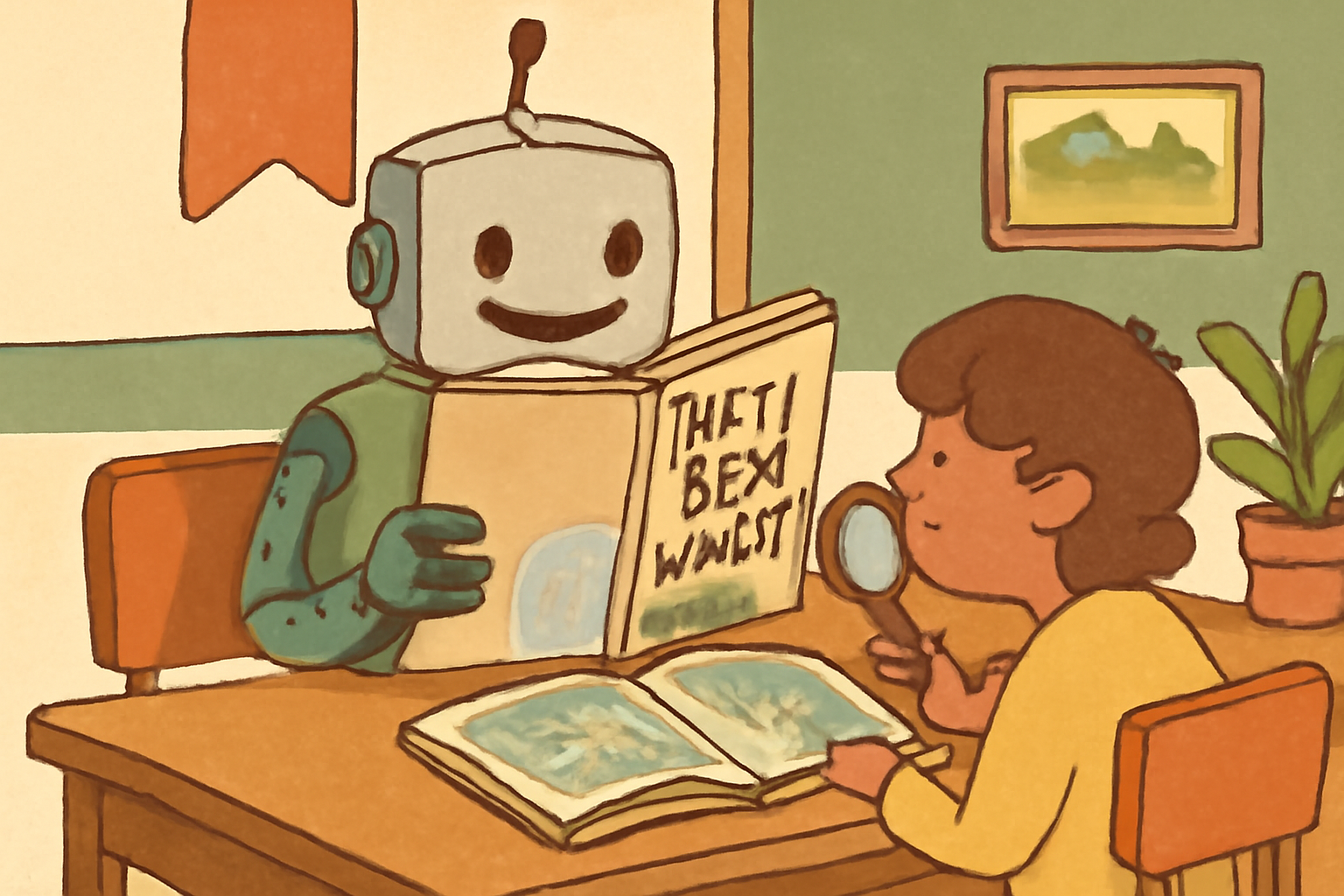
Sometimes the AI tells stories
Ask the AI about a thing that isn't real. Watch what happens. Does it say 'I don't know', or does it make up a story that sounds true?
Have you ever answered a question when you didn't really know the answer? Maybe you had a little guess, and it sounded like you knew all about it?
AIs do that too. Let's watch it happen, and learn how to spot it.
Please tell me three fun facts about a rabbit called Bertie who lives in Willow Class at Willow Primary School.
Please tell me all about the giant strawberry party that happened at the London Eye last Tuesday.
Look at the AI's answer together and ask the class:
- Did the AI say 'I don't know'? Or did it just make something up?
- Did the story sound real, even though it isn't?
- If a friend told you all this, would you believe it straight away, or would you check?
Tell the class a made-up fact in your best 'I really know this' voice. For example: 'Did you know there is a purple giraffe at Kew Gardens who loves cheese sandwiches?'
Ask the class: 'Did that sound real? How could you tell if I was fibbing or telling the truth?' Explain that the AI can sound just as sure of itself, even when it is making things up.
The AI can make things up
The AI wants to help. It really does. So when we ask it a question, it tries very hard to give us an answer.
But sometimes the AI doesn't know. And instead of saying 'I don't know', it has a little guess. It puts the guess in a nice tidy sentence, so it sounds real.
The AI is not being naughty. It is trying to help. We just have to remember that not every answer is a true one.
Ask the class two questions. First: 'What did YOU have for breakfast today?' They know! Now ask: 'What did the King have for breakfast in 1902?' They don't know.
Say: 'What if I told you it was toast and jam? Would that be a real answer, or a made-up one?' Explain that the AI is a bit like this. When it doesn't know, it can still give an answer that sounds real.
How to spot a made-up story
How do you know if the AI has made something up? There are little clues to look for.
Tap each card to see one of the clues.
Tap each card to see the clue.
Lots of tiny details
The AI names people, places, and dates you have never heard of. That is a clue it might be making them up.
It sounds too tidy
Real life is a bit messy. If a story fits together perfectly, it might not be true.
It never says 'I don't know'
A good friend tells you when they are not sure. The AI often just carries on and gives you an answer anyway.
It's about something small or far away
Ask about your local park cat or a tiny village. The AI will often make something up. It doesn't really know.
If a story sounds too tidy, that is a clue. If the AI never says 'I don't know', that is a clue too. Check it in a book or with a grown-up before you believe it.
Show the class the AI's answer about Bertie the rabbit from the starter. Ask: 'Which clues can we see?' Point to the little details the AI made up. Ask: 'Did it ever say I don't know?' Usually not! Now try one more, like: 'Tell me about the biggest banana ever eaten in Cornwall.' Spot the clues together.
What to do next
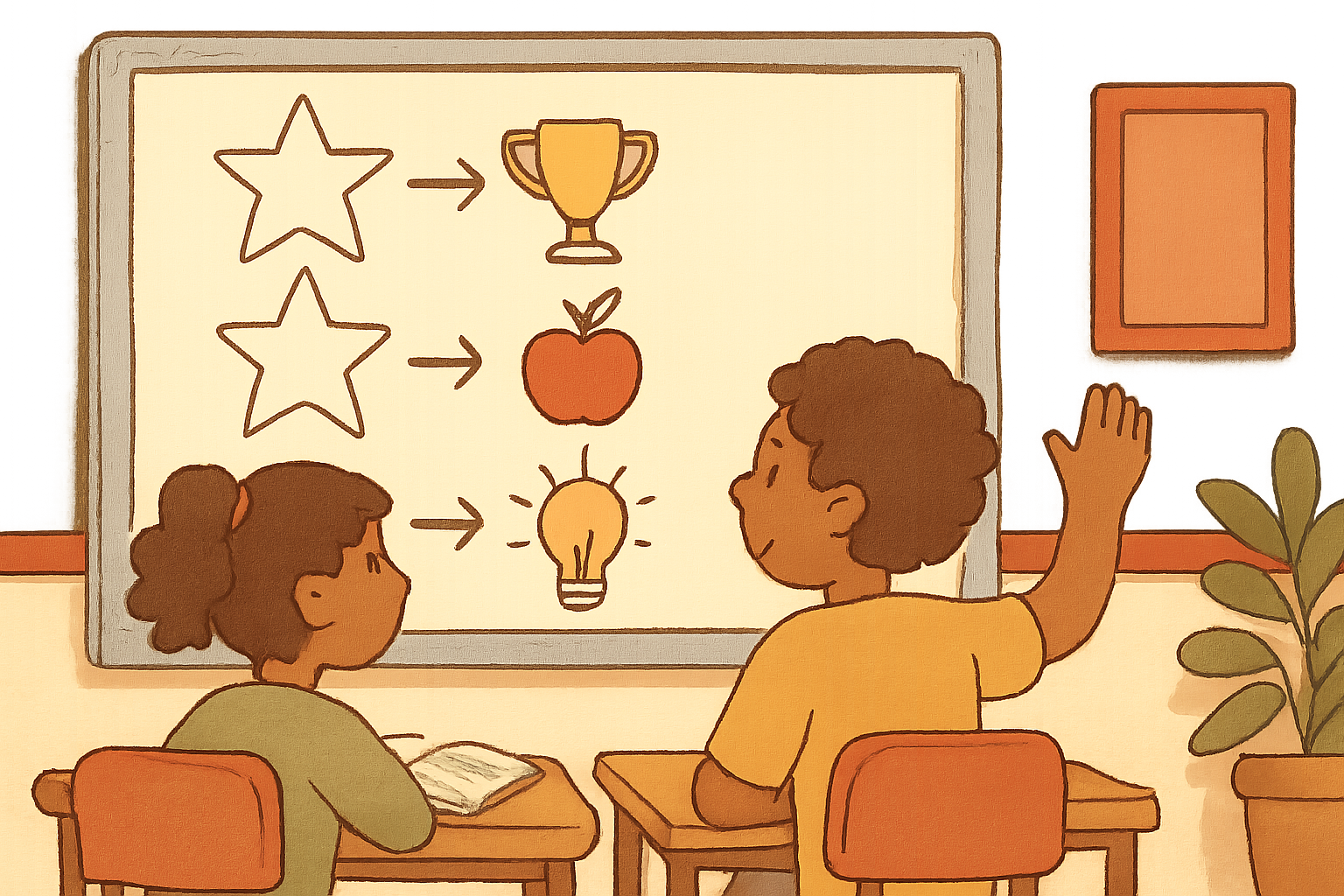
So what should we do when the AI gives us an answer?
We can ask it, 'Are you sure?' Sometimes it will change its mind. We can look in a book, or on a safe website. We can ask a grown-up.
The AI is a helper. But you are the boss. You get to choose what to believe.
Ask the AI a question the class already knows, like 'How many legs does a spider have?' The AI will say eight, and we know that's right. Now ask a trickier one, like 'How many hairs are on a spider's leg?' Whatever the AI says, ask the class: 'Do we know if this is true? How could we check?'
Brainstorm ways together: ask a grown-up, look in a nature book, check a safe website.