When the AI makes stuff up
Why AI can sound really sure and still be wrong
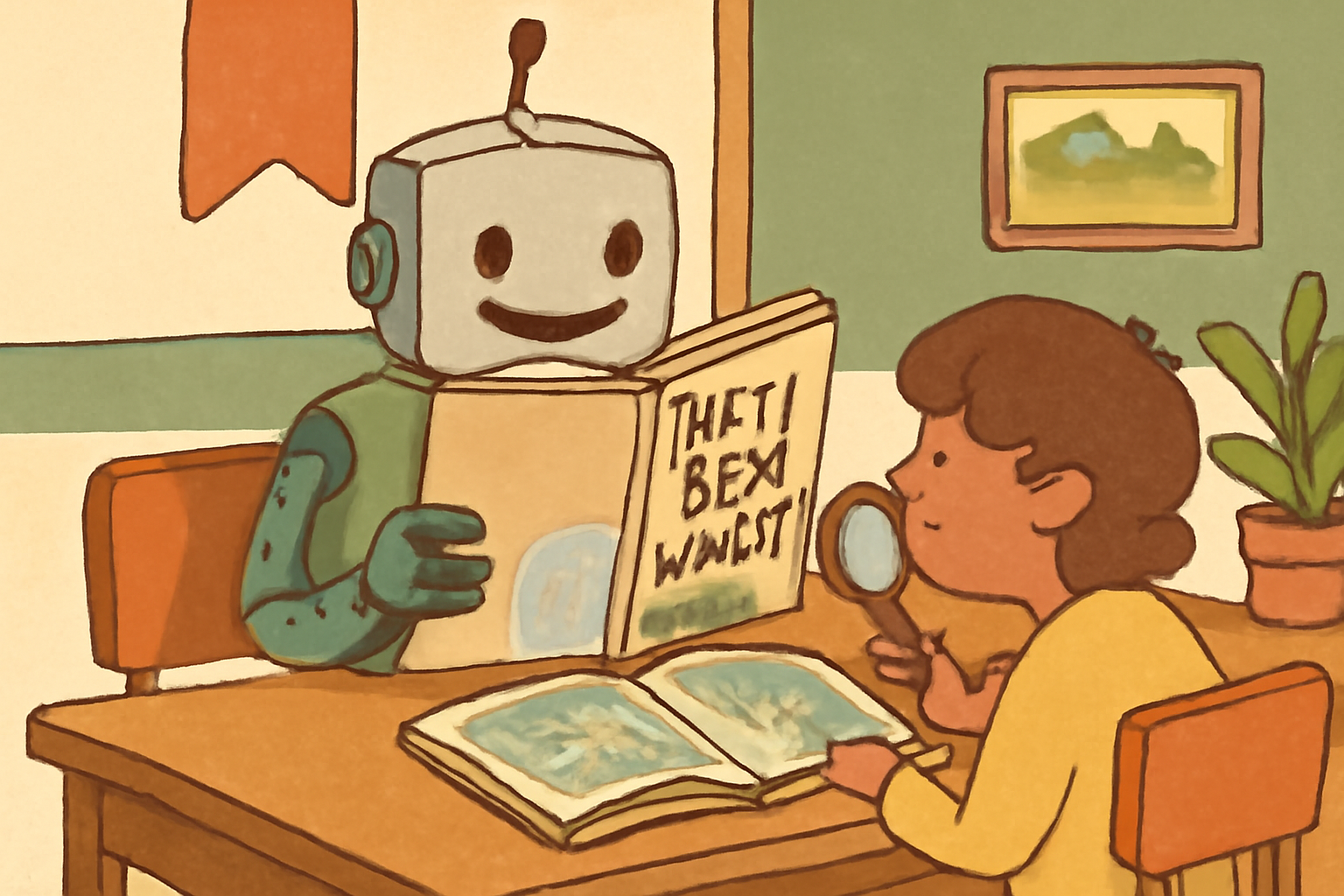
The Olympics that never happened
Before we say anything, let's watch it happen live.
Pick one of the prompts below. Paste it into any AI you have to hand (ChatGPT, Gemini, or Microsoft Copilot all work). Read the answer out loud.
Don't give away yet that the topic is made up. See if you can spot which bits the AI has invented from the answer itself.
Something odd happened when we asked the AI about the 1912 Winter Olympics in Sydney. It didn't say it hadn't heard of them, and it didn't ask if we were sure. It just made one up. It gave us names of athletes, sports they supposedly won, and even the weather that day.
The funny part is that no such Olympics ever existed. Winter Olympics didn't start until 1924, and Sydney is in Australia where December is summer, so no snow. But the AI didn't blink.
This is called a hallucination. It's when the AI confidently tells you something that isn't true. It doesn't know it's wrong. Today we'll learn how to spot it and how to stop it fooling us.
Please tell me all about the 1912 Winter Olympics in Sydney. Who won the ice skating? What was the weather like?
Please tell me the plot of the famous children's book 'The Purple Rabbit of Wittering' by Roald Dahl. Who are the main characters and how does it end?
Look at the AI's answer together and ask the class:
- Did the AI say it didn't know?
- Did the answer sound believable?
- If someone wrote this in their homework, would you spot that it was made up?
- How could we check if any of it was actually true?
What is a hallucination?
The AI is really good at making sentences that sound right. That's what it's built to do. It has read millions of pieces of writing from the internet, and it has learned which words tend to go with which other words.
The tricky bit is that it never checks if what it's saying is actually TRUE. It just makes sentences that FIT. When you asked about the 1912 Winter Olympics, it filled in the blanks with things that sounded like an Olympics story. It didn't stop to ask 'wait, was there even such a thing?'.
We call this a hallucination. The AI is not trying to lie. It just doesn't know the difference between real and made-up. It only knows what sounds right.
Where hallucinations hide

Hallucinations show up in some places much more than others. Before you tap the cards below, have a quick guess with your neighbour. Where do you think the AI is most likely to make something up?
Tap each card to reveal.
Made-up facts
The AI invents things that never happened. Fake football scores, fake YouTubers, fake events at your school. It sounds real because the AI is really good at sounding real.
Very specific numbers
Ask the AI a number question and it will often just pick a number, right down to the last decimal. A very specific-sounding number feels like it must be real, but it often isn't. Confident is not the same as correct.
Fake sources
If you ask the AI for a website or a book to prove its answer, it might just invent one. The link looks real. The title sounds real. The website doesn't exist.
Slightly wrong dates
The AI often gets dates a little bit off. It might say your favourite game came out in 2015 when it was really 2016. Sometimes that matters, sometimes it doesn't, but it's worth checking.
The pattern here is that the AI is happy to fill in gaps with things that just sound right. That is when hallucinations sneak in.
Ask a better question

We can't stop hallucinations completely. But we can make them a lot less likely by asking better questions.
One small trick makes a big difference: ask the AI for sources. If it can point you to a real website or a real book, you can go and check. If it can't, that's a big clue that the answer might be made up.
The two prompts below ask about the same thing. Only one of them gives you a way to check the answer.
Tell me some cool facts about the moon.
There's no way to check the answer. The AI can invent any 'fact' it likes and you probably won't notice. It sounds fine, but you're just trusting the AI.
Tell me three cool facts about the moon. For each fact, please tell me where a curious pupil could go online to check it's true.
The AI now has to give you sources. If it makes a fact up, the fake source often gives it away. And if the sources are real, you can go and read more.
So what would you do?

Time to put it all together. Imagine you're doing a homework project on lions. You asked the AI, 'Please tell me three interesting facts about lions.'
The AI answered:
- Lions can run at 130 kilometres per hour.
- The world's most famous lion was called Sir Barnaby and lived at London Zoo in 1972.
- A group of lions is called a pride.
One of these is definitely true. One is a bit wrong. One is completely made up. What do you do next?