The AI's little choices
Why the same question can give you different answers
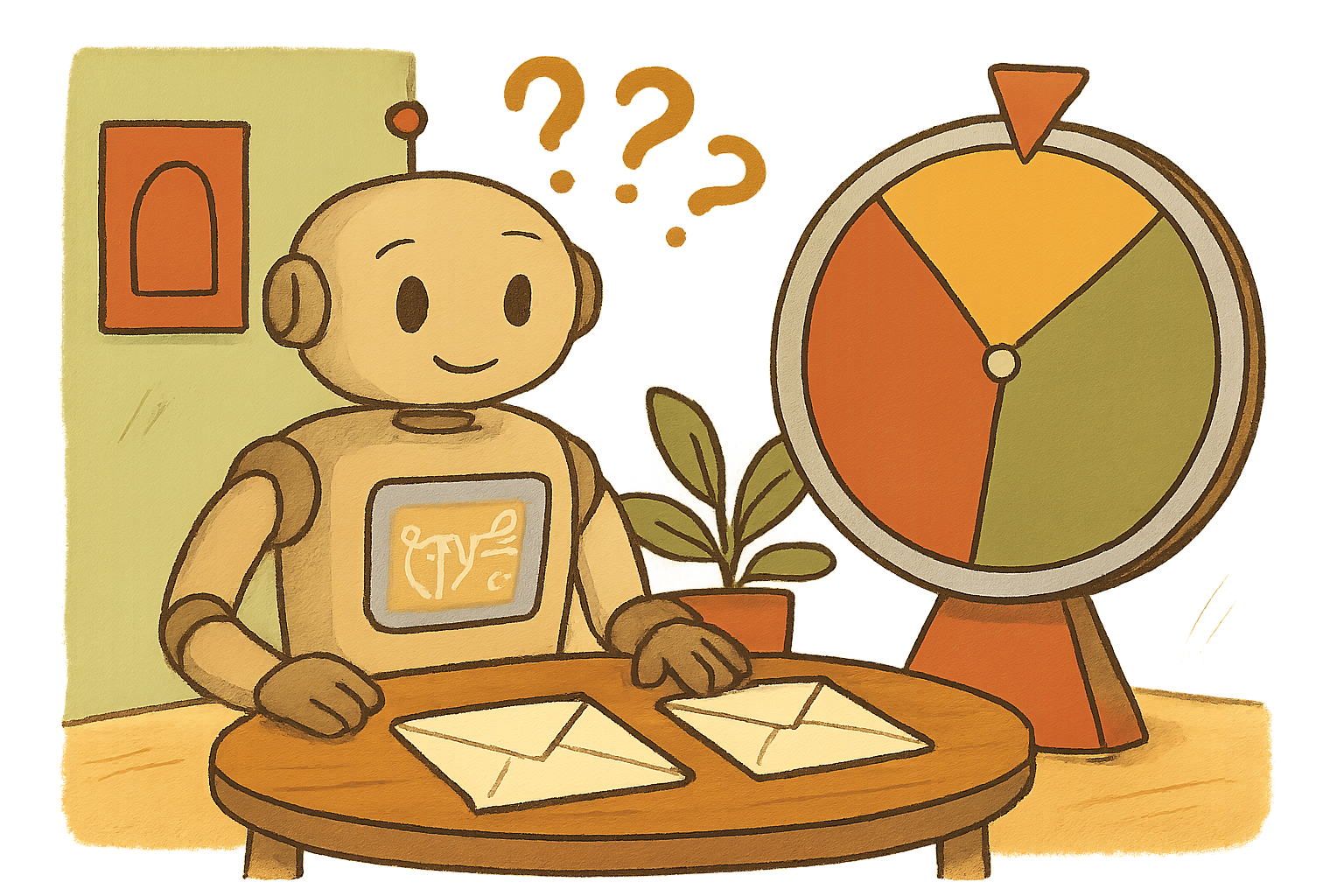
Ask the same question, get three different answers
Before we say anything else, let's watch it happen.
Pick one of the prompts below. Copy it. Paste it into any AI you have handy (ChatGPT, Microsoft Copilot, Gemini). Run the SAME prompt three times, one after the other. Do not change a single word between runs.
Look at the three answers side by side.
Have you ever asked a friend what game to play at breaktime? They might say football today and tag tomorrow. It depends on what they feel like.
AIs do something a bit like that. You can ask an AI the exact same question three times in a row and get three different answers. It isn't broken, and it isn't being cheeky. That's just how the AI works.
Over the next fifteen minutes or so we're going to see it happen live, work out why it happens, and learn when different is fine and when we really do need the same answer every time.
Please draw a silly cartoon monster wearing a football kit. Bright colours, fun, like a picture from a children's book.
Please pick a random number between 1 and 100. Just tell me the number, nothing else.
Write a two-sentence bedtime story about a hamster who wants to be a pilot.
Look at the three answers together and ask the class:
- Were any two answers exactly the same? Even the number one?
- Which of the three was your favourite? Why?
- If we asked YOUR friend the same question three times, would they give you the exact same answer every time?
- Which of these three prompts felt like it was OK to get a different answer, and which one felt a bit weird?
The AI makes tiny choices
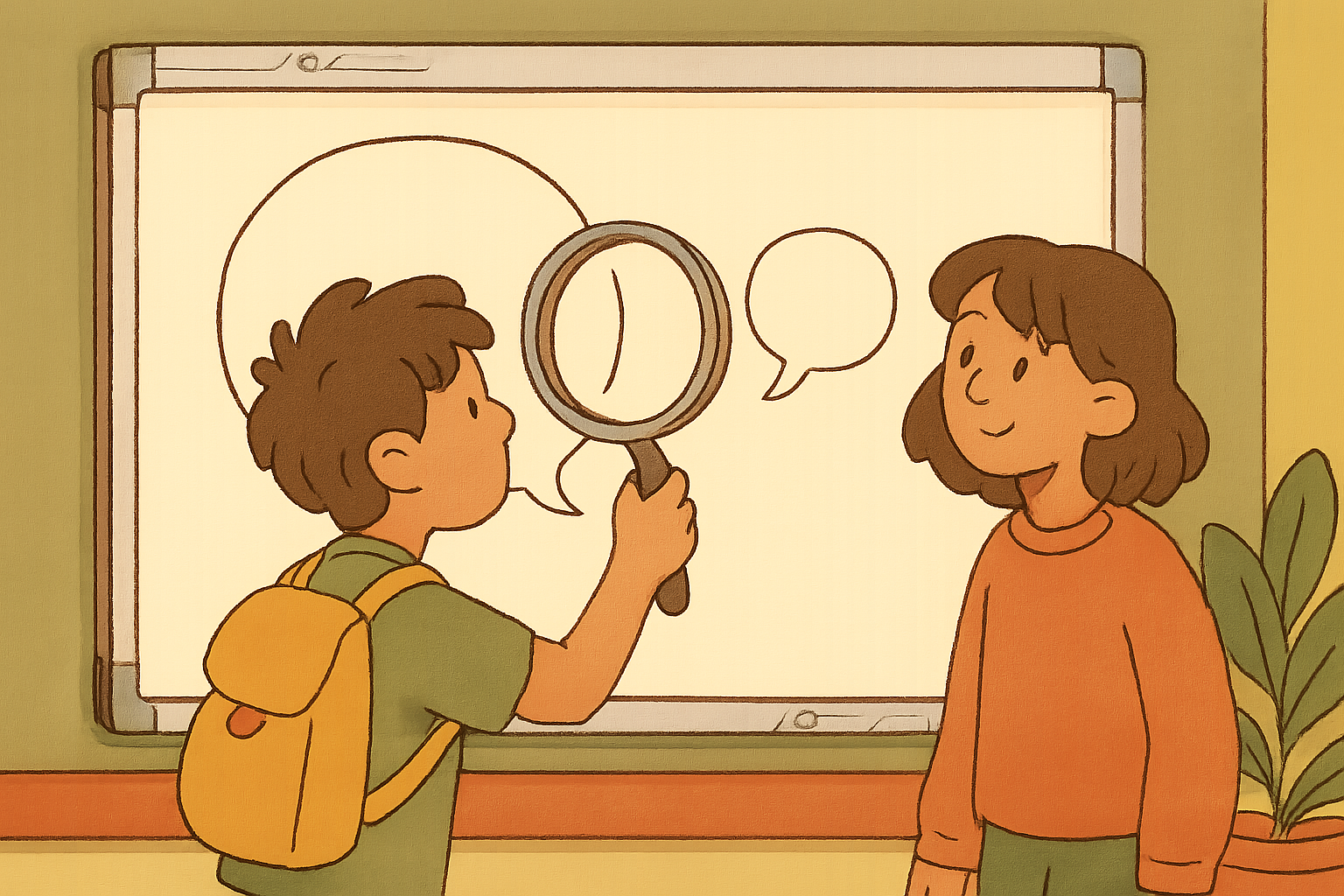
The AI is not like a calculator. A calculator sees 2 + 2 and shows 4 every single time, with no surprises at all.
When you ask the AI to draw a monster or write a story, it has to make hundreds of little choices as it goes. Which colour to pick? Which word to use next? Should the monster have three eyes or five? What should the hamster in the story be called?
Each time you run the prompt, the AI can pick a bit differently. That's why the answer changes. It isn't broken and it isn't trying to trick you. It's just choosing, a little like you would choose if someone asked you to tell a joke twice.
Sometimes different is great, sometimes it's a problem
A different answer each time is not always a problem. Sometimes it's the whole point. If you ask the AI to draw ten cartoon dragons for a game, you want them ALL to look different. Ten identical dragons would be boring.
But some questions have only ONE right answer. Maths, spelling, dates, the rules of your favourite game. If the AI keeps changing its mind on those, we can't trust anything it says.
Before you tap the cards below, have a guess: for each of these, would you rather the AI gave you the same answer every time, or is it fine to be a bit different?
Tap each card to see when different is fine, and when we need the same answer.
Making up a new game character
Different is BRILLIANT. Every character is meant to be unique. If the AI gave you the same character every time, your game would be very boring.
What is 7 times 8?
Same, always. The answer is 56 every time. If the AI sometimes says 54, we cannot trust it with our homework.
A short poem about the seaside
Different is fine. Poems are creative. Lots of different poems can all be lovely.
How do you spell 'necessary'?
Same, please. There is one correct spelling. We cannot learn if the AI keeps changing it.
The rule of thumb: if there is one right answer (like maths or spelling), we need the AI to give us that same answer every time. If it's creative (like a story or a drawing), different is part of the fun.
Ask clearly, get closer
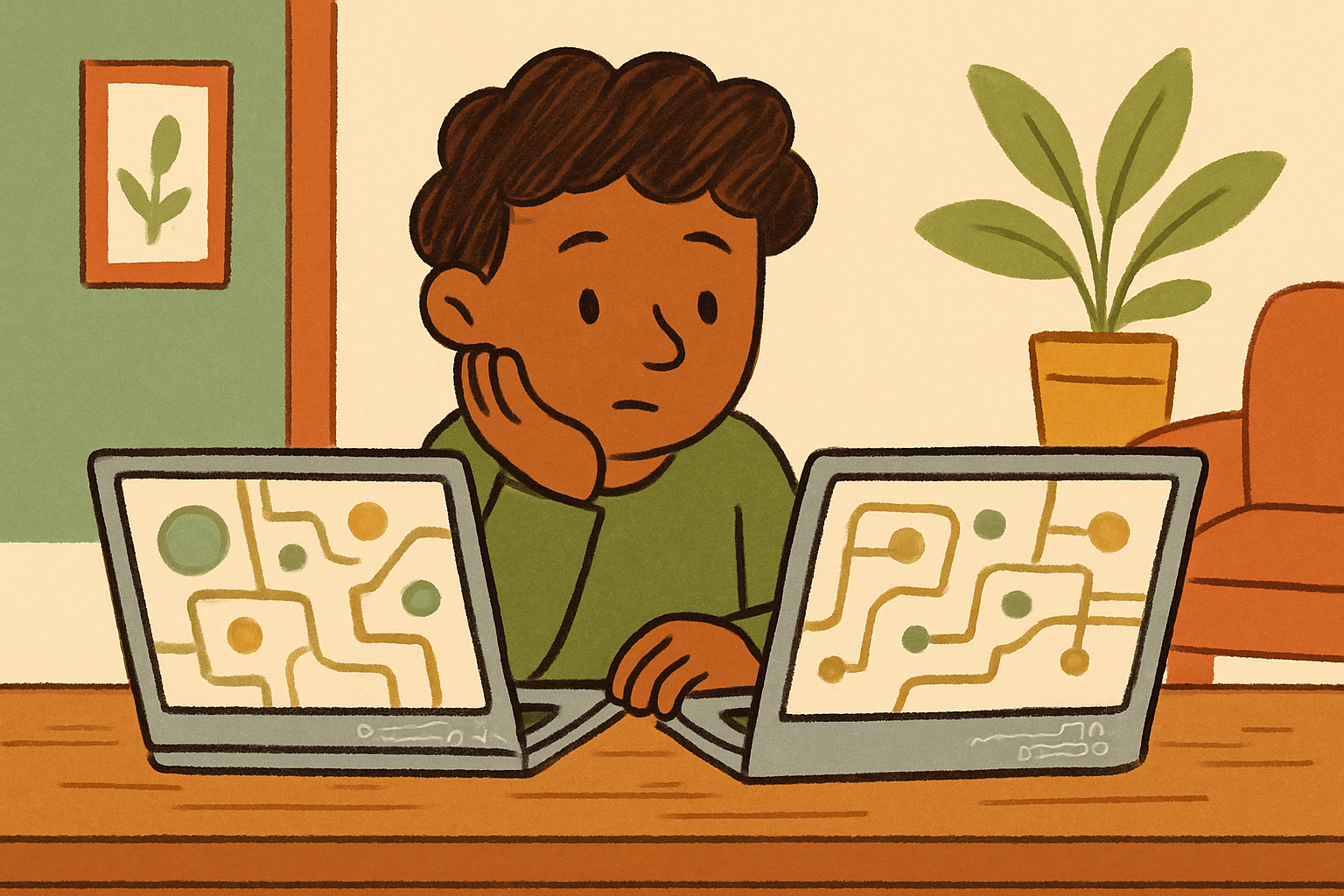
The AI will always make tiny choices. We can't stop that. But we CAN help it choose more of the things we actually want, by giving it a clearer question.
If we ask something very open, the AI has loads of room to pick anything. If we ask something clear, with details, the AI has less room to wander off.
Both of the prompts below ask for a story. One is much more likely to give us the story we wanted.
Give me a story.
This tells the AI almost nothing. It has to guess who the story is for, what it's about, how long it should be, and what should happen. Every time you run this, you'll get something completely different, and probably not what you were hoping for.
Write a short story for a Year 4 pupil about a dog called Biscuit who learns to skateboard. Three paragraphs, please. Happy ending.
This closes off most of the guessing. The AI still picks the exact words (so each version is a bit different), but the shape, the subject, the age of the reader, and the ending are all locked in. You'll get a story you can actually use, first try.
So what would you do?
Time to put everything together. Imagine you're doing your maths homework and there's a tricky sum: 456 x 27.
You ask the AI. The first time it says 12,312. You're not sure, so you run it again. This time it says 12,308. Two different answers!
You know maths has one right answer. You know the AI makes tiny choices each time. What's your best next move?