Spotting deepfakes
Fake pictures, videos, and voices, and how to tell they're fake
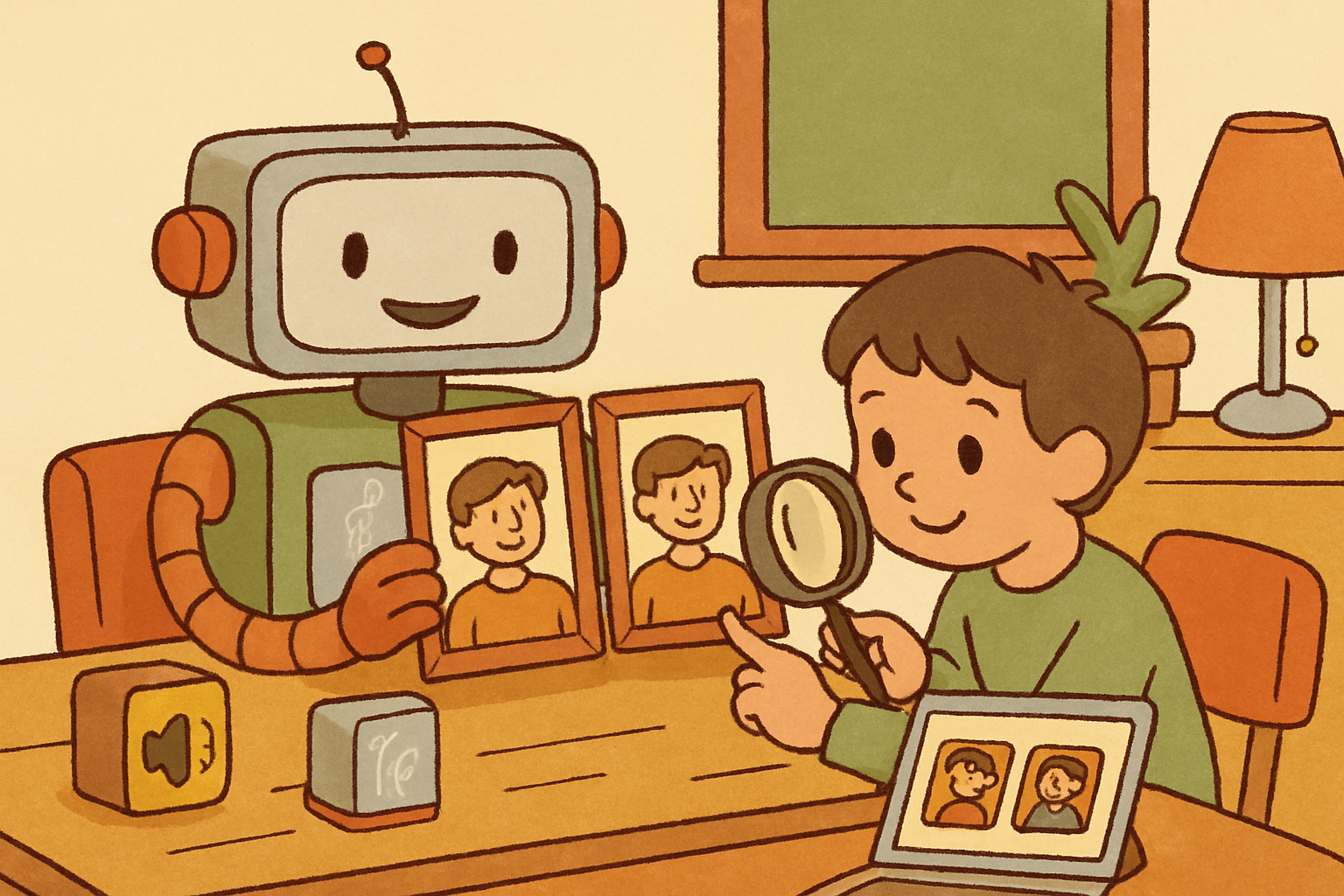
When the video is a lie
Before we say a word, let's look at some fakes. Open the first link below. Every face you see there is completely made up by an AI. Refresh the page a few times. Every single face is a person who has never existed.
Then try the second prompt in any image AI you have access to (ChatGPT, Gemini, or Copilot Designer). Have a look at the result and ask yourself: does it look real?
A video pops up on YouTube. A famous footballer is doing something you've never seen anyone do. It looks real. The kit is right. The stadium is right. But it never happened.
AI can now make fake pictures, fake videos, and even fake voices that look and sound like the real thing. We call these deepfakes. Some are made for a laugh. Some are made to trick people. A lot of them go around your phone before anyone thinks to check.
Over the next fifteen minutes we'll look at what a deepfake actually is. We'll see why they fool people so easily. And we'll pick up the small habits that help you spot one before you share it.
Go to thispersondoesnotexist.com and refresh the page five times. Every face is generated by an AI. None of these people are real.
Please generate a photorealistic photo of a Premier League footballer eating a giant slice of pizza on top of a double-decker bus.
Look at what the AI made and ask the class:
- Which of the faces looked most real to you? Which one felt a bit off?
- If you saw the pizza-bus photo on your phone, would you believe it?
- Where might you see a picture like this online?
- If a friend sent you the picture, what could you do to check if it was real?
What is a deepfake?
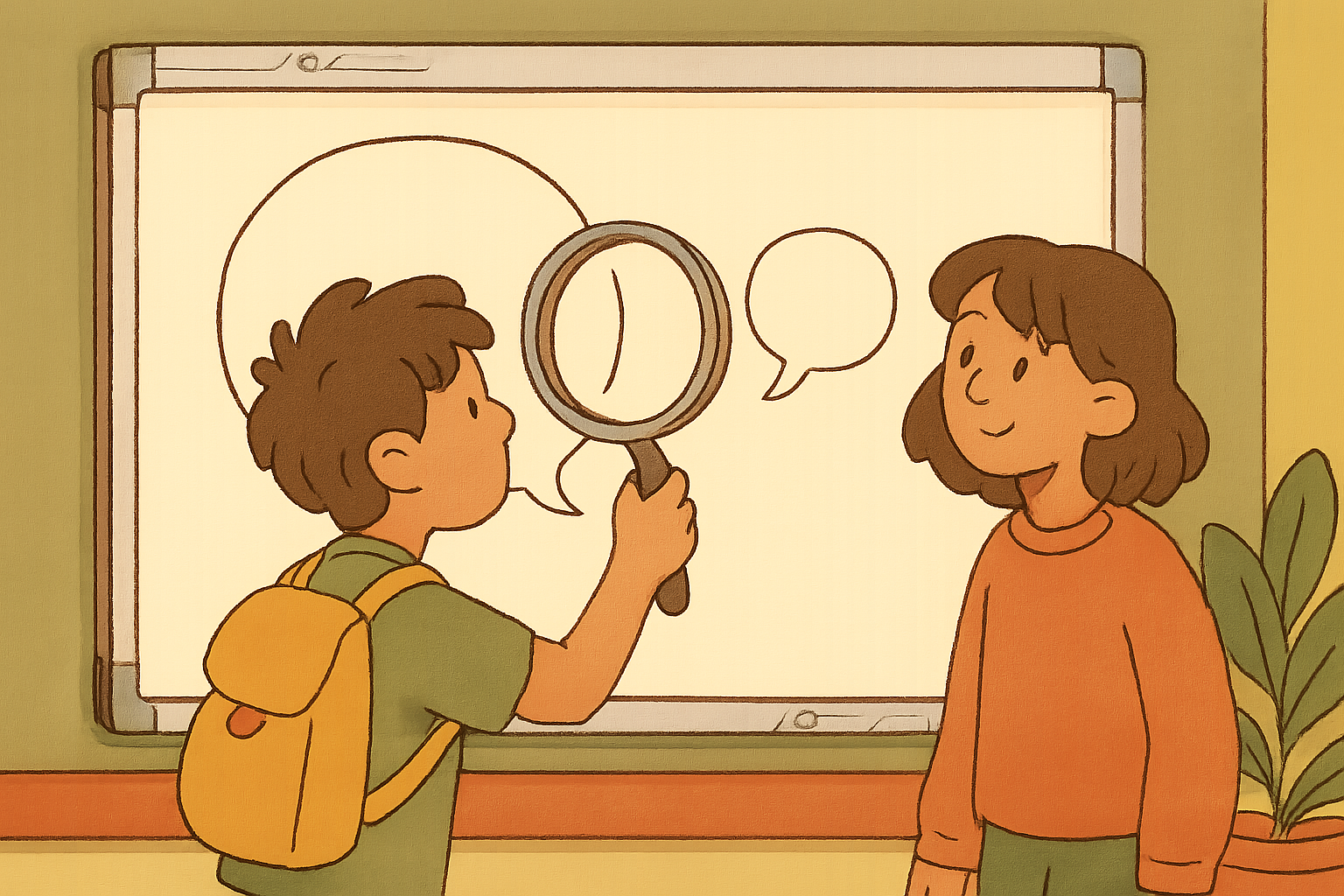
The word deepfake just means a fake made by an AI. It could be a picture, a video, or even a voice.
The AI has learned from millions of real photos and videos. So when it makes a new one, it copies all the little clues that make things look real. Think skin, shadows, teeth, and the way light bounces off a face. That's what makes them tricky to spot.
Before you tap the cards below, have a guess: what three kinds of things can an AI fake?
Tap each card to reveal.
Fake pictures
The AI can make photos of people or places that never existed. Some are silly (a footballer eating a giant pizza). Some are meant to fool you (a fake news photo of a famous person somewhere they've never been).
Fake videos
The AI can make a video of a real person saying or doing something they never did. It matches their face, their voice, and even the way they move their mouth.
Fake voices
The AI can copy someone's voice from just a short clip of them talking. Then it can make that voice say ANY words. Some scammers have used this to trick families into thinking a loved one is in trouble.
So deepfakes are not just fake photos. They can be videos and voices too. That's why we have to think carefully before we believe what we see or hear online.
Why deepfakes fool us
Deepfakes fool us for three reasons, and it helps to know all three.
First, they LOOK real. The AI has learned from millions of real photos, so it copies the tiny details our brains use to check.
Second, they spread fast. A funny or shocking video gets shared in minutes, before anyone thinks to check it.
Third, they play on our feelings. If a video makes us laugh, or angry, or scared, we're less likely to stop and ask, 'Wait, is this actually true?'
Four things to check
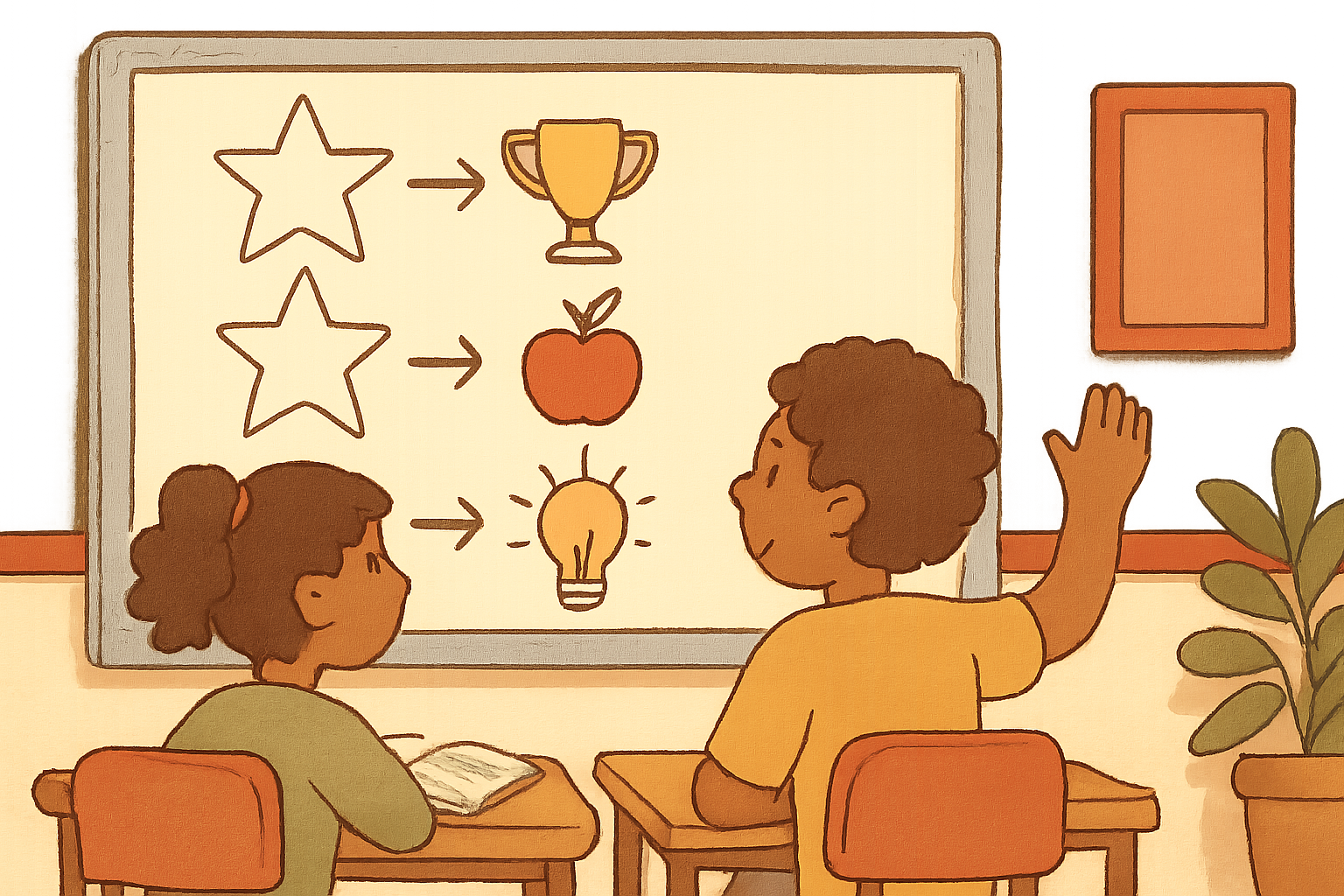
You don't need to be a computer expert to catch a deepfake. Four small habits will catch most of the ones you meet.
Before you tap the cards, have a guess: if you saw a wild video of your favourite pop star, what would YOU do to check if it was real?
Tap each card to reveal.
Ask: did this really happen?
Before anything else, stop and think. Does this fit with what I know? A famous person doing something totally out of character is a big clue that something's off.
Check with a grown-up or the news
If it's a big story, real news websites (like the BBC or Sky News) will have it. If they don't, be suspicious. A grown-up you trust can help you check together.
Look for tiny weird bits
AI often gets small things wrong: extra fingers on a hand, teeth that don't quite line up, blurry ears, or strange writing on signs in the background. Zoom in and hunt for the giveaways.
Search the picture online
You can right-click a picture (or long-press on a phone) and choose 'Search image with Google'. If it's a real photo, you'll usually find it on a news site. If it's a deepfake, you might find people saying so.
These aren't a checklist to do once and forget. They are a way of thinking about anything wild you see online.
So what would you do?
Time to put it all together. Imagine this.
You're on your phone one evening. A friend sends you a video. In it, your headteacher (yes, YOUR headteacher) is telling the whole school that Fridays are cancelled forever. It looks like her. It sounds like her. It was filmed in your school hall.
Your friend has typed: 'IS THIS REAL??? SHARE IT!'
You know deepfakes exist. You know the four checks. What do you do?